
You Bought the Machine. Now What?
You found the right VMC. You closed the deal on that Haas VF-6. You won the auction lot on that injection molder. Now someone asks you what trailer you need, and you realize you have no idea.
Most machinery buyers are experts in what they do with equipment, not in how it ships. That is completely fine. But picking the wrong trailer is not just an inconvenience. It can mean a machine that does not legally fit on the trailer, an overheight citation at a weigh station, a forced reload on the side of the highway, or freight that arrives damaged because it was tarped when it needed to be Conestoged.
This guide gives you the practical answer to one question: which trailer does your machine actually need? We will walk through each trailer type with real specs from our carrier network and real used machinery moves our team have transported over the years of doing this.
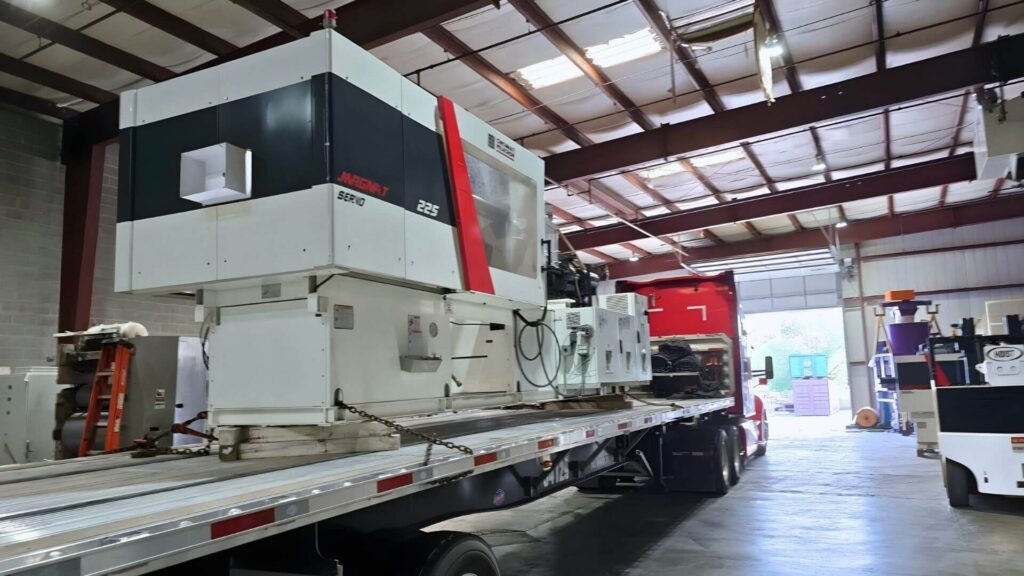
Option 1: Standard Flatbed
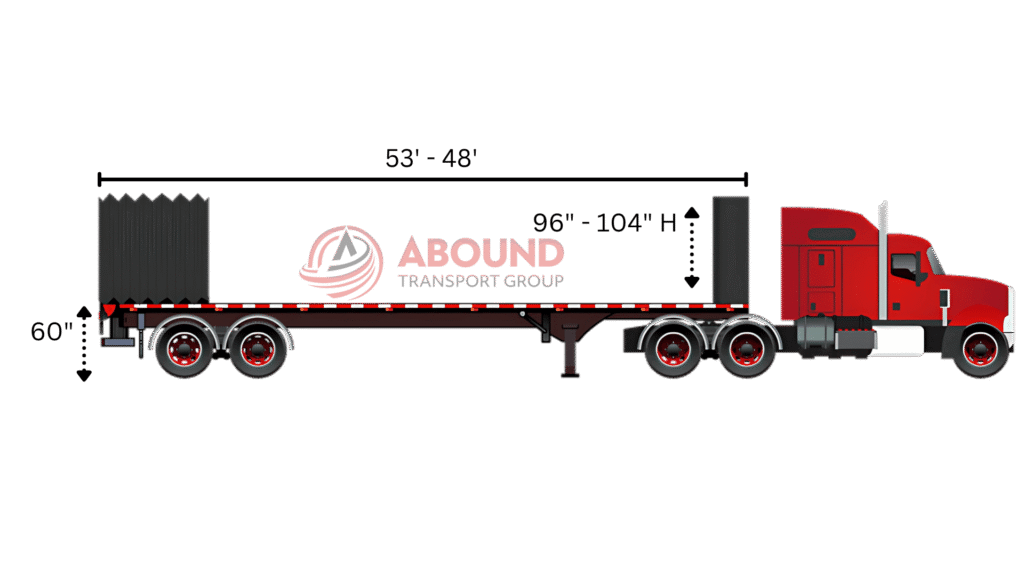
Deck height: 60 inches
Legal max cargo height: 102″-108″ H depending on states traveled
Max payload: approximately 48,000 lbs
Length: 48 to 53 feet
A flatbed is the most common open-deck trailer in North America and the right starting point for most machinery moves. The deck is approximately 5 feet off the ground, which means your machine plus any skid or pallet material has to stay at or under 102-108 inches tall to clear legal height limits in most states (some western states allow up to 14 feet overall heights and eastern are all 13’6″ overall. You can reference our Height Map Diagram here.
Real machinery scenarios where a flatbed works:
A compact CNC lathe at 60 inches tall on a skid. A knee mill at 54 inches. A press brake in a shipping crate at 80 inches. A palletized lot of tooling, chucks, and accessories. Steel plate or structural material. A skid-mounted compressor or generator all under the 48,000 lbs. to stay within legal weight limits.
Where a flatbed does not work:
Machinery taller than 102 inches measured from the trailer deck. A standard Haas VF-2 with the chip conveyor attached is approximately 90 to 95 inches. On a flatbed, that is close to the line, but often the correct way to transport them and for long haul we like ot transport the VF-2 PTL, sharing space for other direct deliveries cross country. Check out more information about our Partial Truckload services for CNC machinery.
What about tarping?
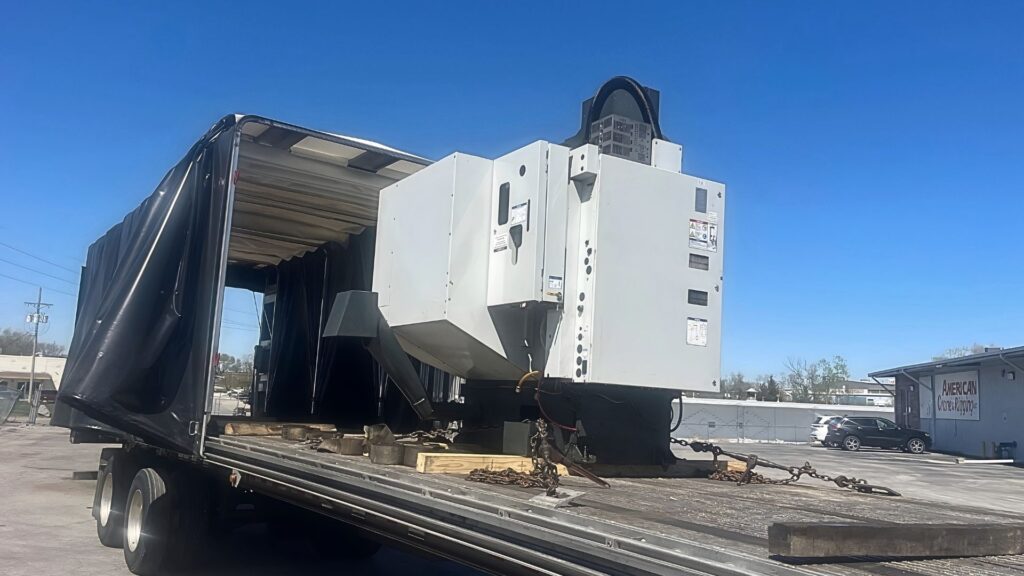
On a standard flatbed, weather protection means a canvas tarp applied directly to the machine. Tarps work fine for steel, lumber, construction materials, and crated machines where surface contact does not matter. For machines with painted enclosures, glass panels, or electronics on the exterior, a tarp draped over the surface can cause tarp rash, condensation, and damage. That is where a Conestoga comes in which is option #4 below.
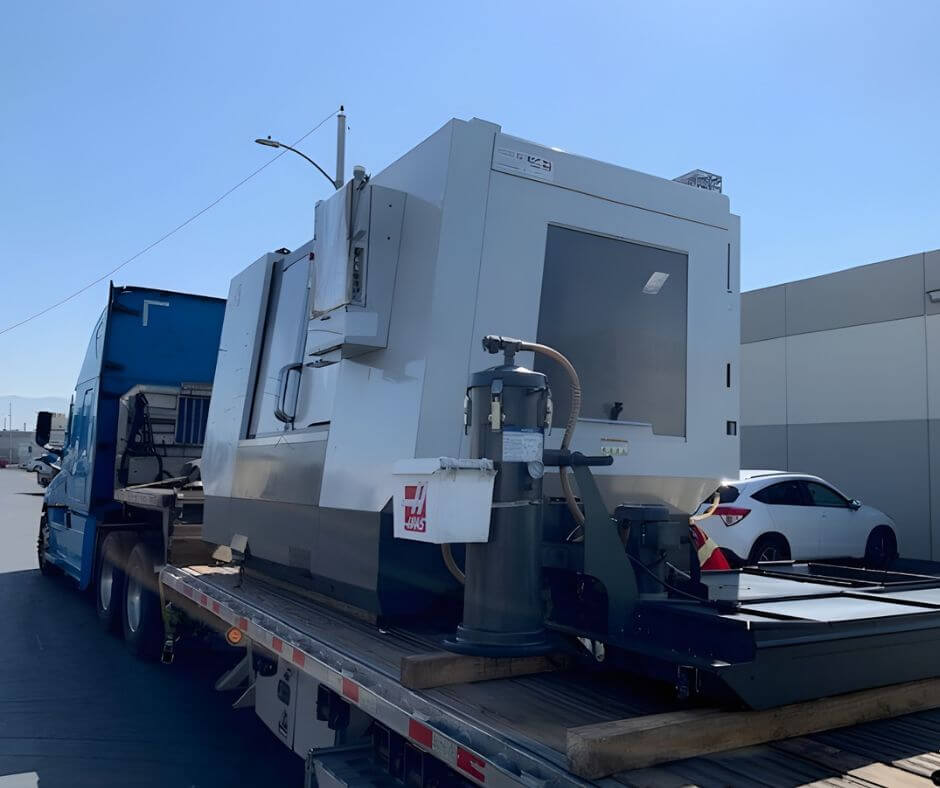
Option 2: Step Deck
Lower deck height: 42 inches
Legal max cargo height on lower deck: approximately 120 inches (10 feet)
Max payload: approximately 45,000 to 48,000 lbs
Length: 48 to 53 feet
The step deck is the workhorse for machinery transport. That extra 18 inches of clearance over a flatbed, the difference between a 60-inch deck and a 42-inch deck, is what lets taller machines travel legally without an overheight permit in most states.
The lower deck is typically 38 to 41 feet long, which accommodates the footprint of most standard CNC machines, lathes, press brakes, and mid-size industrial equipment. The upper deck (the “step”) handles the front of the trailer and is typically 10 to 12 feet long. Freight sits on the lower deck.
Real machinery scenarios where a step deck is the right call:
A Haas VF-5 with coolant tank measures approximately 108 inches tall. On a flatbed at 60-inch deck height, total height is 168 inches which is over legal. On a step deck at 42-inch deck height, total height is 150 inches which clears 13-foot 6-inch limits in most states without a permit. Step deck is the answer.
A Mazak QT-200 lathe at 90 inches tall on a skid adds up to 132 inches total on a step deck. Legal everywhere in the continental US without a permit.
A Trumpf laser at 110 inches. A DMG MORI 5-axis at 106 inches. A Bystronic press brake at 114 inches. These are all step deck moves.
Loading a step deck:
Step decks load from the side by crane or forklift, or from the rear with a ramp if the trailer is equipped with one. Unlike an RGN, equipment cannot drive onto a step deck. If your machine needs to be crane-loaded, that is fine. The step deck is designed for it.
Conestoga step deck:
If your machine has an enclosure, control panels, glass windows, or finished surfaces you cannot afford to have a tarp touching, the Conestoga step deck gives you the lower deck clearance of a step deck with the full rolling-tarp protection of a Conestoga. Maximum cargo height on the lower deck is 116 inches. This is the most commonly specified trailer for CNC machinery at ATG.
See full step deck specs here.
See Conestoga step deck specs here.
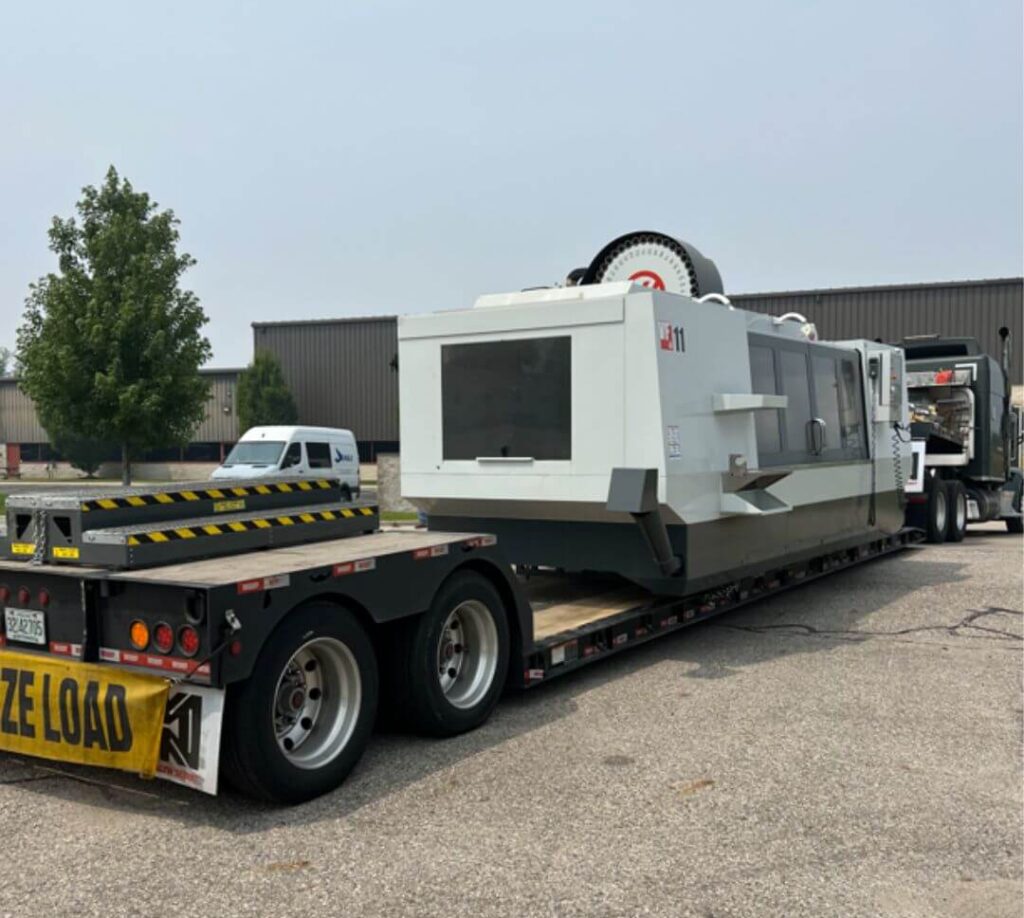
Option 3: Double Drop / RGN (Removable Gooseneck)
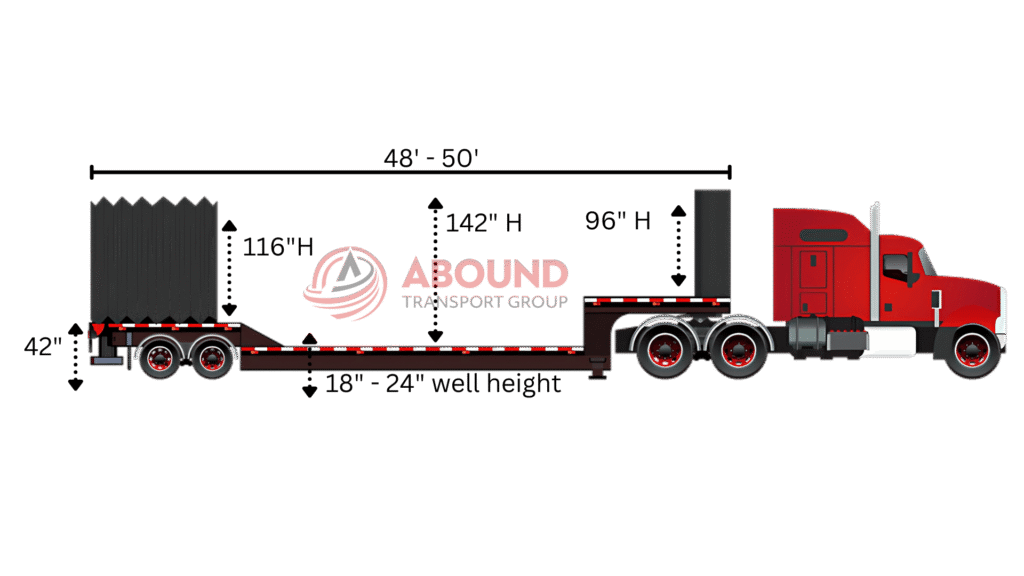
Well height: 18 to 24 inches
Legal max cargo height in the well: approximately 138 to 142 inches (11.5 to 12 feet)
Payload: 40,000 to 150,000+ lbs depending on axle configuration
Well length: 24 to 30 feet standard; 29 to 50 feet on stretch configurations
The double drop, also called a lowboy or RGN, is the trailer for machinery that is too tall, too heavy, or both for a step deck to handle. The well sits 18 to 24 inches off the ground, which gives you dramatically more vertical clearance. In the well of a double drop Conestoga, you can carry cargo up to 142 inches tall. That is nearly 12 feet of usable height.
The RGN (Removable Gooseneck) variant adds a feature that matters enormously for certain machines: the front of the trailer detaches, creating a ramp angle that allows self-propelled equipment to drive directly onto the trailer from the ground. For excavators, bulldozers, large forklifts, and other wheeled or tracked equipment, this eliminates the need for a crane at the loading site.
Real machinery scenarios where a double drop or RGN is the right call:
A large injection molding machine at 130 inches tall and 65,000 lbs. This load would not legally fit on a flatbed or step deck and exceeds the weight capacity of a standard trailer. It goes on a multi-axle lowboy, likely with overweight permits.
A Haas VF-6SS at 120 inches tall. This is right at the step deck limit. If the machine has a chip conveyor adding height, or if the route includes tight-clearance states, a double drop is the safer choice.
A full-size excavator at 12 feet tall and 80,000 lbs. It drives onto the RGN under its own power after the gooseneck is removed. A step deck cannot load this at all.
An 880-ton injection molding press. We have moved these. They require multi-axle RGNs, overweight permits, pilot car escorts, and route surveys. But they move, and they arrive intact.
When permits are required:
Any load on any trailer that exceeds 8.5 feet wide, 13.5 feet tall total, or 80,000 lbs gross vehicle weight requires an oversize or overweight permit. On a double drop configuration with a heavy machine in the well, you will frequently exceed the 80,000 lb threshold. That is not a problem. It means permits, and permit coordination is part of the ATG process.
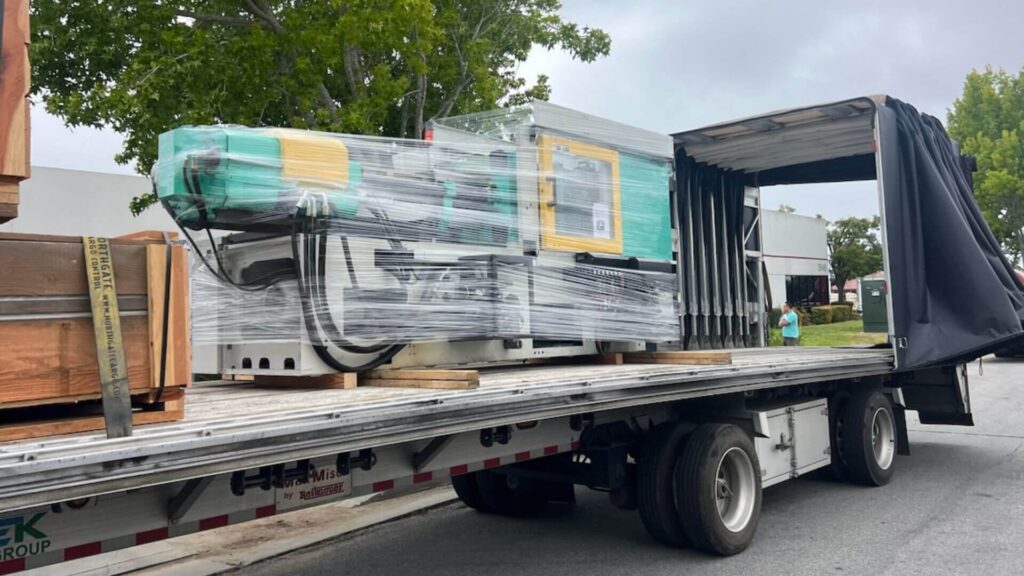
Option 4: Conestoga Trailer
What it is: A flatbed, step deck or double drop with a rolling aluminum-frame tarp system that fully encloses the load from the sides and top, with zero tarp-to-cargo contact.
Max cargo height:
- Conestoga Flatbed: 96 to 104 inches
- Conestoga Step Deck (lower deck): 116 inches
- Conestoga Double Drop (well): 142 inches
This is not a separate trailer category so much as a protection system applied to a flatbed, step deck, or double drop. The distinction matters because Conestoga is not just a premium option. For certain machines, it is the only correct answer.
Here is the practical test: if your machine has any of the following, it should travel on a Conestoga.
- Painted enclosure panels that cannot tolerate canvas tarp contact
- Exterior glass windows (common on enclosed CNC machining centers)
- External control pendants or operator interfaces
- Exposed electrical components or wiring
- Finished surfaces that would show tarp rash marks
A standard tarp draped over a Haas or Mazak enclosure will make contact with every raised surface, panel edge, and glass window it touches. Over a 1,200-mile haul, that contact causes abrasion, moisture trapping, and surface damage. The Conestoga system rolls over the load on an aluminum arch, covering it completely without touching it.
The cost premium over a standard flatbed is 15 to 30 percent. On a machine worth $150,000, that premium is a very easy decision.

Option 5: Hotshot
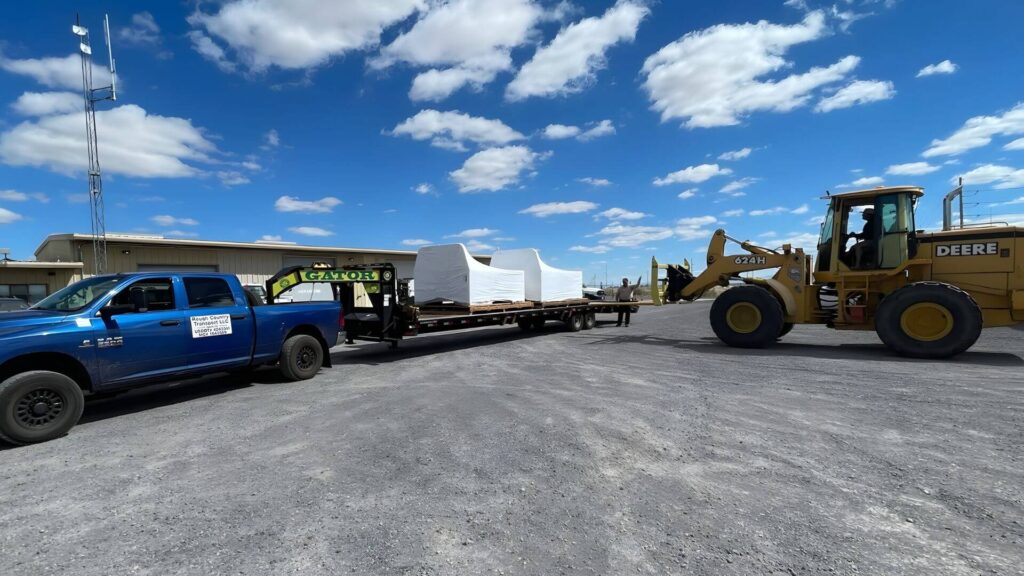
Deck height: 36 to 40 inches
Max payload: approximately 12,000 to 18,000 lbs
Deck length: 30 to 40 feet
Hotshot is not the right trailer for most CNC machines or large industrial equipment because most do not have air-ride suspension, which is a must when hauling CNC Machinery.
A hotshot is a CDL-rated pickup truck pulling a gooseneck flatbed trailer. The setup is more nimble than a full semi, often available same-day, and reaches locations where a 53-foot trailer cannot maneuver easily.
When hotshot makes sense for machinery buyers:
You bought a single small lathe or knee mill under 15,000 lbs and need it in two days. A spindle motor or hydraulic unit needs to reach a repair facility urgently. A tooling package, chuck set, or accessory lot from an auction needs to move fast. A replacement part for a down machine needs to arrive before your production line loses another day.
When hotshot does not make sense:
Machinery over 18,000 lbs and or needs air-ride suspension.
The Decision Chart: Which Trailer Does Your Machine Need?
Use this reference every time you buy a machine and need to figure out what to request:
| Machine Height (on skid) | Machine Weight | Trailer Recommendation |
|---|---|---|
| Under 84 inches (7 feet) | Under 48,000 lbs | Standard Flatbed |
| Under 84 inches, surface sensitive | Under 47,000 lbs | Conestoga Flatbed |
| 102 to 120 inches tall | Under 46,000 lbs | Step Deck |
| 105 to 116 inches, surface sensitive | Under 44,000 lbs | Conestoga Step Deck |
| 120 to 142 inches | Under 40,000 lbs | Double Drop / RGN |
| 120 to 142 inches, surface sensitive | Under 35,000 lbs | Double Drop Conestoga |
| Any height, over 48,000 lbs | Any | Multi-axle RGN (heavy haul, permits required) |
| Under 15,000 lbs, urgent move | > 18,00 lbs | Hotshot |
| Self-propelled equipment (excavator, dozer) | Any | RGN (5-13 axles) |
Real Machinery Scenarios from Our Floor
Scenario 1: Haas VF-2, 9,500 lbs, 88 inches tall
This machine fits on a flatbed. Deck height is 60 inches, total is 148 inches, which is under the 13-foot 6-inch limit in most states. But the enclosure has glass windows and a painted exterior. We recommend a Conestoga Flatbed to eliminate tarp contact entirely.
Scenario 2: Mazak Integrex i-400, 22,000 lbs, 105 inches tall
Total height on a flatbed: 165 inches. Over the legal limit. Total height on a step deck: 147 inches. Legal in most states without a permit. The machine has an exterior control pendant. We book a Conestoga Step Deck.
Scenario 3: Okuma MULTUS B400W, 28,000 lbs, 105 inches tall
Step deck puts this at 147 inches total. Legal. No exposed surfaces of concern beyond the enclosure. Conestoga Step Deck recommended. If the route includes eastern states with lower clearance restrictions, we recommend a stepdeck or stepdeck conestoga for this machine to be safe.
Scenario 4: Engel e-motion 440 injection molder, 58,000 lbs, 128 inches tall
Weight exceeds standard flatbed and step deck payload. Height is within double drop range. We book a multi-axle RGN, coordinate permits for the crossing states, and arrange rigging at both pickup and delivery.
Scenario 5: CAT 336 excavator purchased at Ritchie Bros, 80,000 lbs operational weight
Self-propelled, heavy, and tall. RGN with removable gooseneck. The machine drives onto the trailer from the ground after the gooseneck is detached. Overweight permits required. Pilot cars likely depending on route.
What Happens When You Choose the Wrong Trailer
Choosing the wrong trailer is not just a paperwork issue. It has real consequences:
Flatbed when you needed a step deck: The load is over legal height. You either catch it before dispatch and scramble to re-book at a premium, or you catch it at a weigh station with a citation and a forced unload.
Tarped flatbed when you needed a Conestoga: The tarp contacts the machine’s enclosure panels and glass windows on a 1,200-mile haul. You open it at delivery and find surface abrasion on a $180,000 machining center that the carrier’s standard liability policy will dispute.
Step deck when you needed an RGN: The machine is too heavy. The carrier arrives, discovers the actual weight, and either declines to load or loads improperly with inadequate axle distribution. Both outcomes are problems.
Hotshot when you needed a flatbed: The machine is too heavy for the hotshot’s payload rating. This is a safety and compliance issue, not just a logistics error.
The right trailer costs the same as the wrong trailer. It takes the same amount of time. It just requires knowing what you are shipping and asking the right question before you book.
Not Sure? Tell Us the Dimensions and Let Us Decide.
You do not need to be a trailer expert. That is what we are here for. Send us the machine’s length, width, height, and weight (or the model number if you want us to look it up), and we will tell you exactly what trailer your load needs and what it will cost.
At Abound Transport Group, trailer selection is part of every quote. We do not just book capacity. We match the right equipment to your specific machine, coordinate rigging if needed, handle oversize permits, and get your equipment to your facility in the condition it left.
Tell us what you’re shipping and get a custom quote.
(800) 957-2558 | Monday to Friday, 5:30 AM to 5:00 PM PST
Frequently Asked Questions
It depends on the machine's height. Most CNC vertical machining centers in the Haas VF or Mazak QT class ship on a Conestoga Step Deck, which provides 116 inches of clearance on the lower deck and full tarp-free enclosure. Compact machines under 84 inches tall can go on a Conestoga Flatbed. Very large machining centers over 120 inches tall or over 48,000 lbs need a Double Drop or RGN.
A step deck has two levels: an upper deck at 60 inches and a lower deck at 42 inches, providing up to 120 inches of cargo height clearance. A lowboy or double drop has a center well that sits only 18 to 24 inches off the ground, providing up to 142 inches of clearance in the well. Lowboys are used for taller and heavier loads that exceed step deck limits.
RGN stands for Removable Gooseneck. It is a lowboy trailer with a front section that detaches, creating a ground-level ramp that allows self-propelled equipment such as excavators and bulldozers to drive directly onto the trailer. You need an RGN when your equipment is self-propelled, very heavy, or too tall for a step deck.
Permits are required when a load exceeds 8.5 feet wide, 13.5 feet tall (truck plus cargo), or 80,000 lbs gross vehicle weight. Many large CNC machines and all heavy construction equipment exceed at least one of these thresholds. Abound Transport Group handles permit coordination as part of every oversize or overweight shipment.
A Conestoga is an open-deck trailer with a rolling aluminum-frame tarp system that fully encloses the load with zero tarp-to-cargo contact. Unlike a canvas tarp draped directly over a machine, the Conestoga arches over the load and protects it from weather and debris without touching surfaces, glass, or electronics. For CNC machines and precision equipment, it is the correct protection method.
No. A full-size excavator needs an RGN (Removable Gooseneck) trailer. The front gooseneck detaches to create a ramp, and the excavator drives onto the trailer under its own power. Flatbeds and step decks do not allow drive-on loading and typically cannot handle the weight of a full-size excavator.