Trailer Guide

Trailer Dimensions Chart

Most freight trailers are 102 in wide and 48 or 53 ft long. A flatbed deck is about 60 in high, a step deck lower deck about 38 to 42 in, and an RGN or double drop well about 18 to 24 in. Legal freight height varies by state (13 ft 6 in to 14 ft in most).

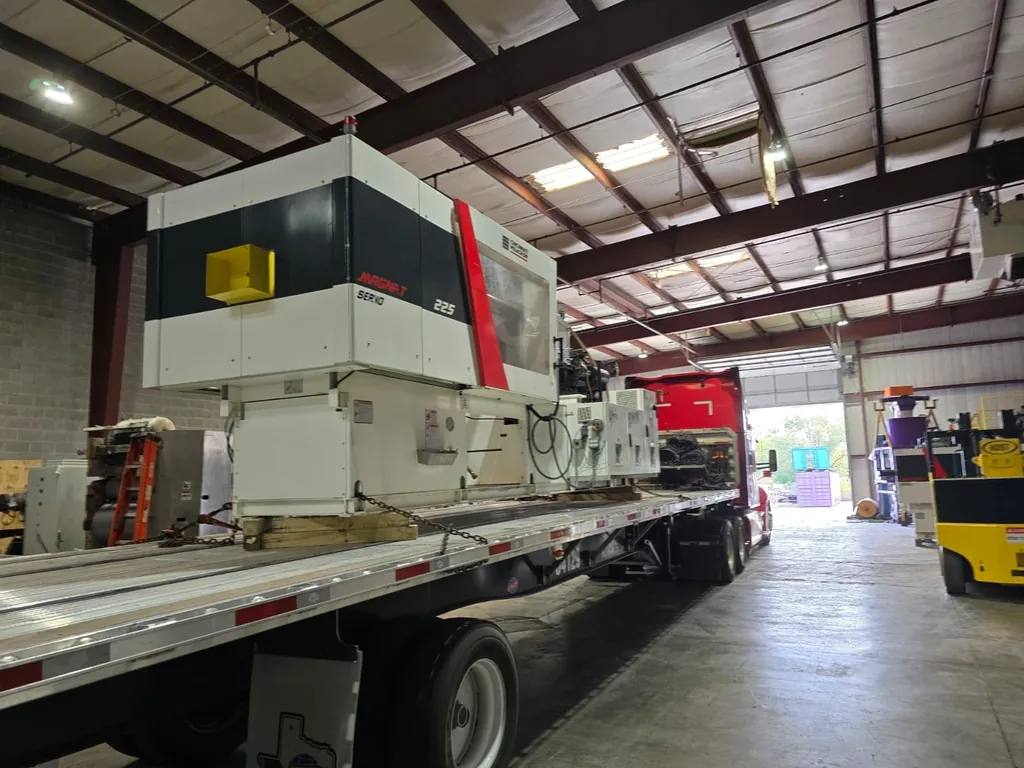
Injection molding machine chained on a flatbed trailer showing trailer dimensions for machinery freight

18 Trailers

Trailer Dimensions by Trailer Type

Choose any of the 18 trailers and trucks below to see its diagram and full specs. Open-deck trailers load from the top, sides, or rear. A Conestoga keeps open-deck loading and adds a rolling tarp. Enclosed equipment loads from the rear at a dock or with a liftgate.

Choose a trailer type below

Open Deck

Hotshot

How big is a hotshot trailer?

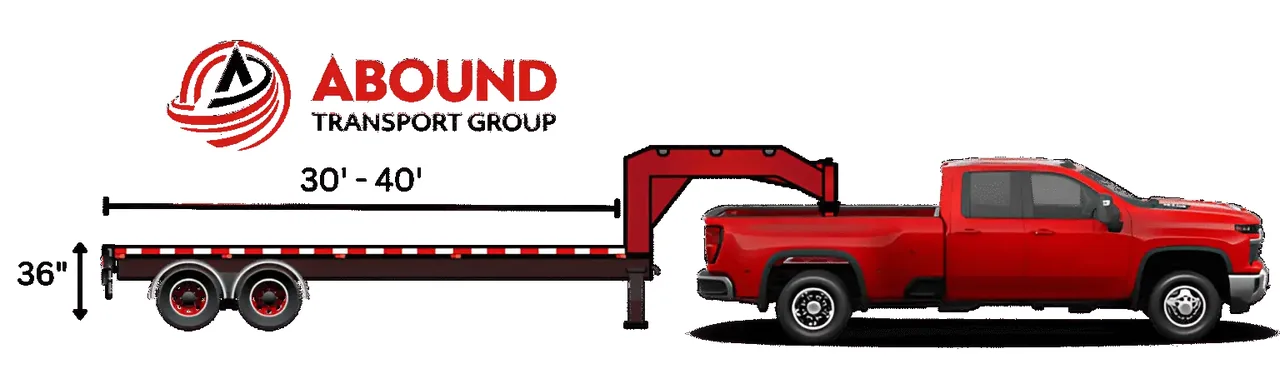
A hotshot trailer is typically 30 to 40 ft long and 102 in wide, with a deck about 33 to 36 in high. That leaves about 10 ft 6 in of legal freight height, and typical freight weight is about 12,000 to 17,000 lbs. It pairs a Class 3 to 5 pickup with a gooseneck flatbed.

Deck length30 to 40 ft
Deck width102 in
Deck heightAbout 33 to 36 in
Legal freight heightAbout 10 ft 6 in
Max freight weightAbout 12,000 to 17,000 lbs
Hotshot trailer dimensions diagram, 30 to 40 ft gooseneck flatbed with about 36 in deck height, on a white background
See Hotshot Details

Key Features

  • Pairs a Class 3 to 5 pickup, such as an F-350 or F-450, with a gooseneck flatbed
  • Quick to dispatch for smaller urgent loads
  • Cost-effective when the freight does not need a full semi
  • Open deck for parts, smaller machinery, and regional freight

Best Used For

  • Single machines
  • Parts and pallets
  • Ag and oilfield equipment
  • Light, urgent, or shorter regional loads

Open Deck

Flatbed

How big is a flatbed trailer?

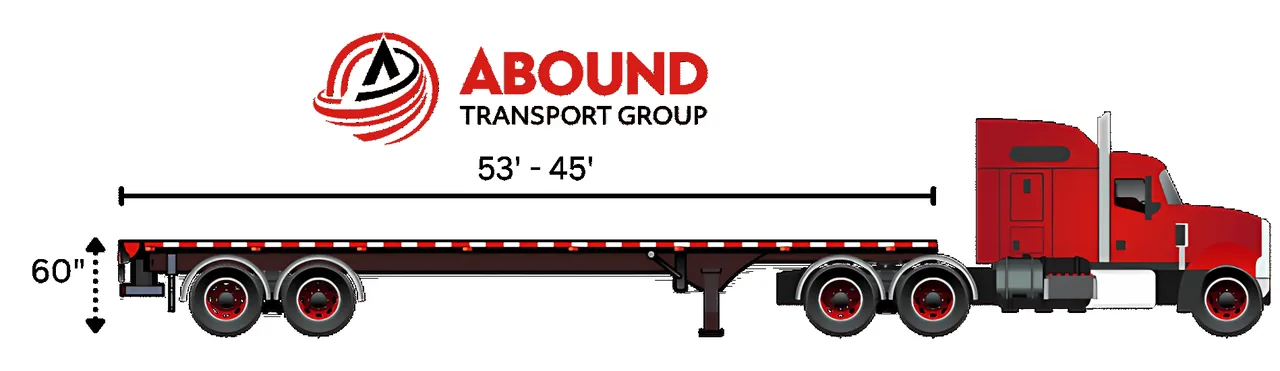
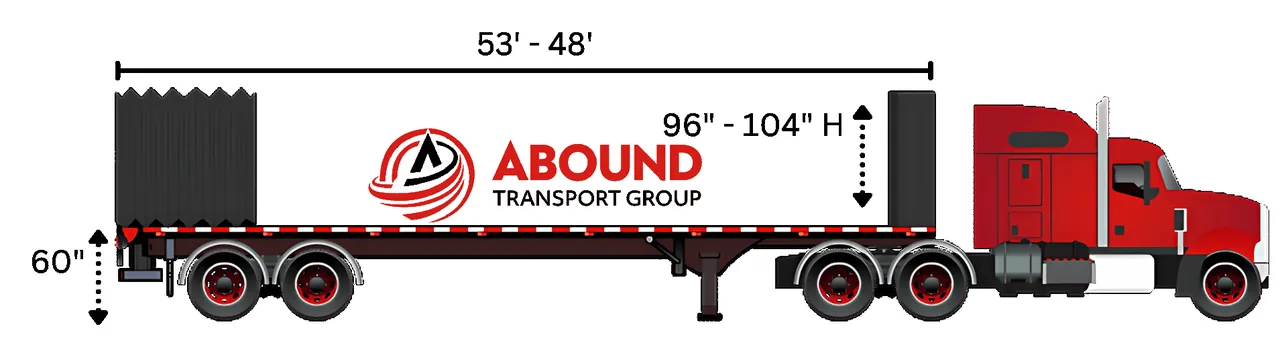
A standard flatbed is 48 or 53 ft long (45 ft available) and 102 in wide, with a deck about 60 in off the road. That leaves about 8 ft 6 in of legal freight height, and most flatbeds carry about 48,000 lbs of freight. It loads from the top, sides, or rear and does not need a dock.

Deck length48 or 53 ft (45 ft available)
Deck width102 in
Deck heightAbout 60 in
Legal freight heightAbout 8 ft 6 in
Max freight weightAbout 48,000 lbs
Flatbed trailer dimensions diagram showing about 60 in deck height and 45 to 53 ft deck length, on a white background
See Flatbed Details

Key Features

  • Loads from the top, sides, or rear by forklift or crane
  • Does not need a loading dock
  • No sides or roof, so freight that will not fit through van doors can ship
  • Suits machinery, steel, lumber, and building materials

Best Used For

  • Steel and lumber
  • Crated machinery
  • Building materials
  • Freight under about 8 ft 6 in tall that loads from the side or top

Open Deck

Flatbed Stretch

How big is a flatbed stretch trailer?

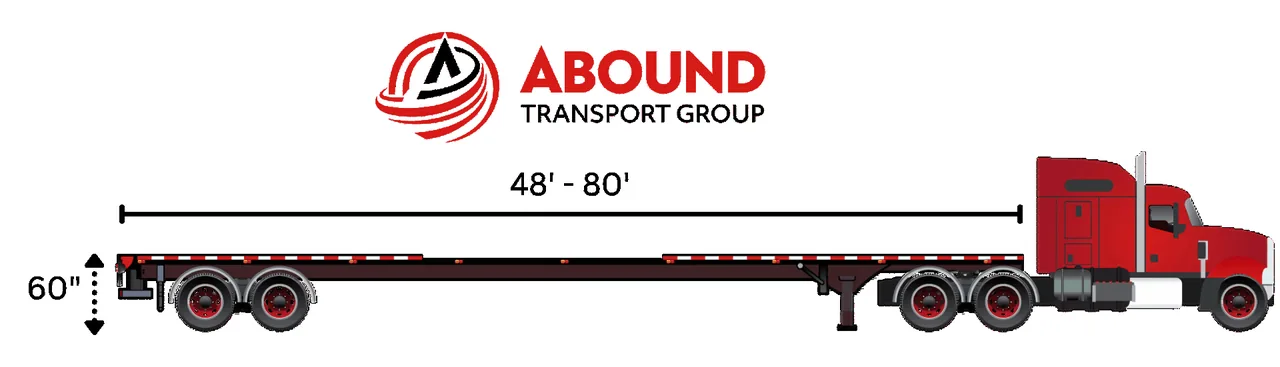
A stretch flatbed is 48 ft closed and extends up to about 80 ft, with a 102 in width and a deck about 60 in high. Legal freight height is about 8 ft 6 in, and typical freight weight is about 43,000 to 45,000 lbs. The deck slides out so long freight is supported instead of overhanging.

Deck length48 ft closed, up to about 80 ft extended
Deck width102 in
Deck heightAbout 60 in
Legal freight heightAbout 8 ft 6 in
Max freight weightAbout 43,000 to 45,000 lbs
Flatbed stretch trailer dimensions diagram with an extendable deck, on a white background
See Flatbed Details

Key Features

  • Deck extends from 48 ft closed up to about 80 ft
  • Slides out in sections to support the full length
  • Same 60 in deck height as a standard flatbed
  • Built for long beams, pipe, bridge members, and wind energy parts

Best Used For

  • Beams, pipe, and poles
  • Girders and long fabrications
  • Freight longer than 53 ft
  • Loads that would overhang a standard deck

Open Deck

Step Deck

How big is a step deck trailer?

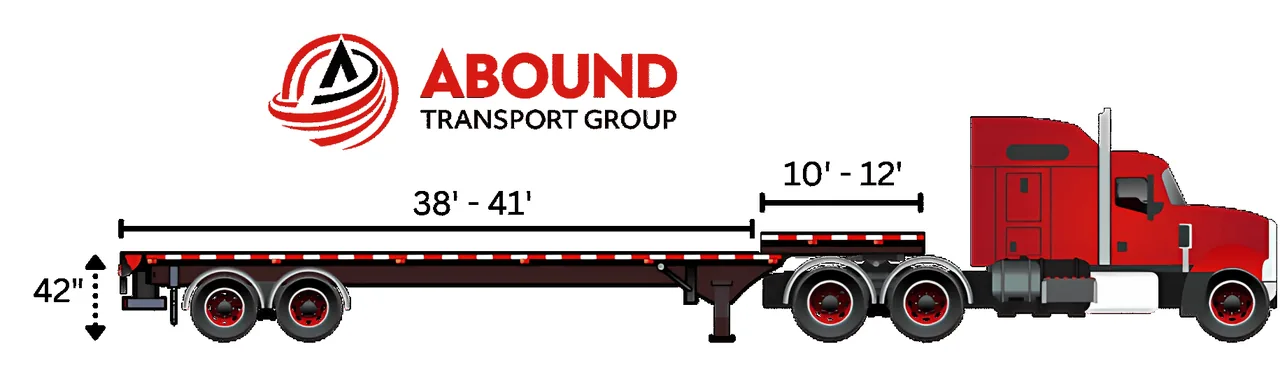
A step deck is 48 or 53 ft long and 102 in wide, with an upper deck of 10 to 11 ft and a lower deck of 38 to 42 ft. The lower deck sits about 38 to 42 in high, leaving about 10 ft of legal freight height. Typical freight weight is about 43,000 to 48,000 lbs.

Deck length48 or 53 ft (upper 10 to 11 ft, lower 38 to 42 ft)
Deck width102 in
Deck heightAbout 38 to 42 in (lower deck)
Legal freight heightAbout 10 ft
Max freight weightAbout 43,000 to 48,000 lbs
Step deck trailer dimensions diagram showing the lower deck height and upper deck length, on a white background
See Step Deck Details

Key Features

  • Short upper deck over the tractor and a longer, lower main deck
  • Lower deck about 38 to 42 in high
  • Lets taller freight stay legal without an over-height permit
  • The usual next step when freight is too tall for a flatbed

Best Used For

  • CNC machines and tall crates
  • Tractors and compact equipment
  • Freight roughly 8 ft 6 in to 10 ft tall

Open Deck

Low Profile Step Deck

How big is a low profile step deck trailer?

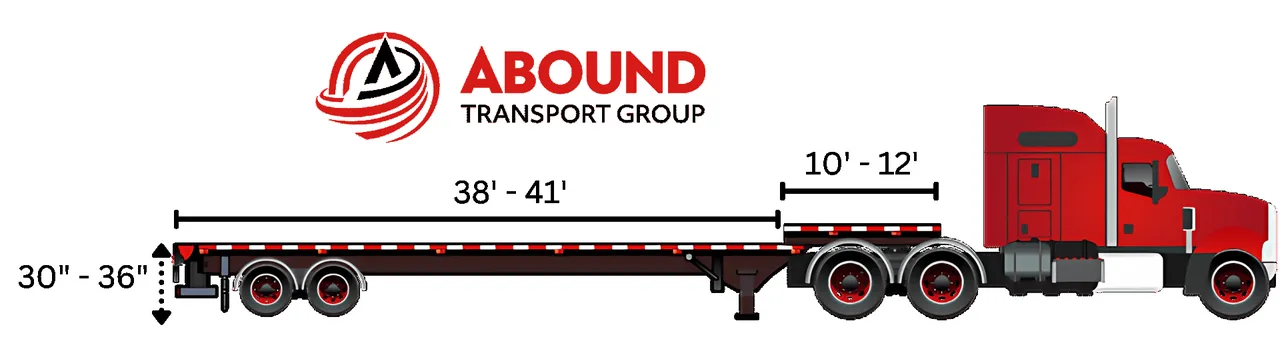
A low profile step deck is 45 to 53 ft long and 102 in wide, with a main deck about 30 to 36 in high instead of the usual 38 to 42 in. That extra clearance leaves about 10 ft 6 in to 11 ft of legal freight height. Typical freight weight is about 42,000 to 48,000 lbs.

Deck length45 to 53 ft
Deck width102 in
Deck heightAbout 30 to 36 in
Legal freight heightAbout 10 ft 6 in to 11 ft
Max freight weightAbout 42,000 to 48,000 lbs
Low profile step deck trailer dimensions diagram with a lower main deck height, on a white background
See Step Deck Details

Key Features

  • Main deck about 30 to 36 in high, lower than a standard step deck
  • Adds clearance for loads at or just over standard step deck height
  • 45 to 53 ft long and 102 in wide

Best Used For

  • Machines just over standard step deck height
  • Cable reels
  • Loads that would sit a few inches over legal height on a standard step deck

Open Deck

Tri-Axle Step Deck

How big is a tri-axle step deck trailer?

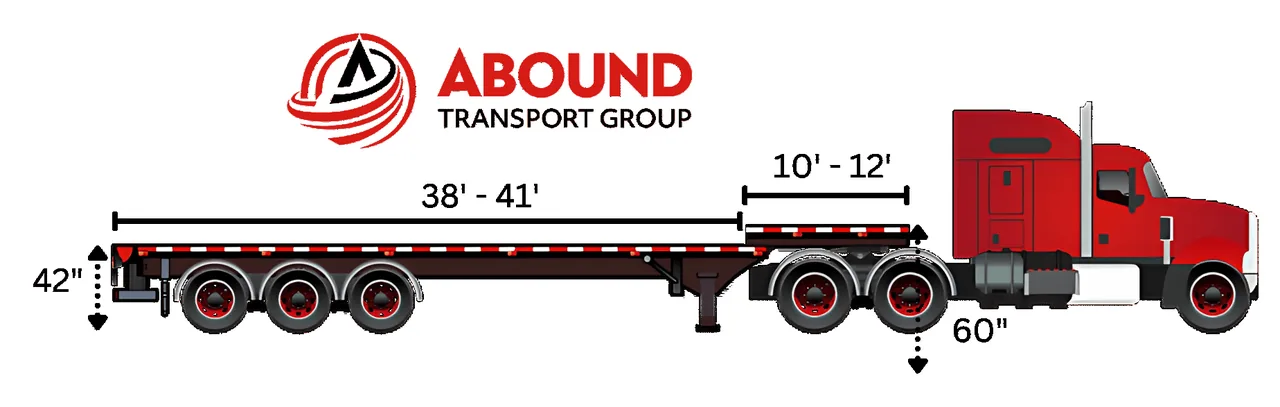
A tri-axle step deck is 48 to 53 ft long and 102 in wide, with a deck about 40 to 42 in high and about 10 ft of legal freight height. The third axle spreads weight over more tires, so typical legal freight weight is about 45,000 to 50,000 lbs, and more with an overweight permit.

Deck length48 to 53 ft
Deck width102 in
Deck heightAbout 40 to 42 in
Legal freight heightAbout 10 ft
Max freight weightAbout 45,000 to 50,000 lbs legal; more with an overweight permit
Axles3
Tri-axle step deck trailer dimensions diagram with a third axle and lower deck height, on a white background
See Step Deck Details

Key Features

  • Adds a third axle to spread weight over more tires
  • A middle ground between a standard step deck and an RGN
  • For equipment that does not need to drive on
  • Deck about 40 to 42 in high

Best Used For

  • Excavators and loaders
  • Dense machinery
  • Mixed equipment loads
  • Heavy, tall freight that loads by crane or forklift

Open Deck

Step Deck Stretch

How big is a step deck stretch trailer?

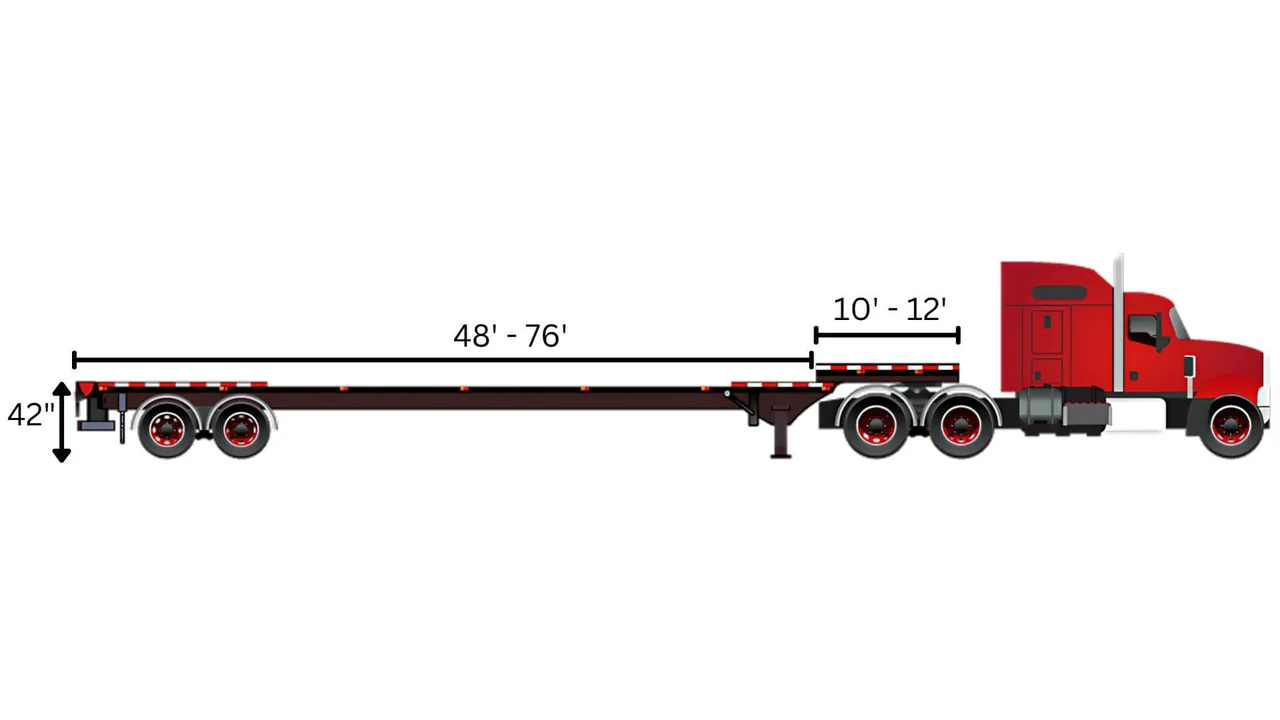
A step deck stretch is 48 ft closed and extends up to about 76 ft, with a 102 in width and a deck about 28 to 42 in high. Legal freight height is about 10 to 11 ft, and typical freight weight is about 40,000 lbs. The lower deck slides out so freight can be both tall and long.

Deck length48 ft closed, up to about 76 ft extended
Deck width102 in
Deck heightAbout 28 to 42 in
Legal freight heightAbout 10 to 11 ft
Max freight weightAbout 40,000 lbs
Step deck stretch trailer dimensions diagram with an extendable lower deck, on a white background
See Step Deck Details

Key Features

  • Two-level step deck with an extendable lower section
  • Opens from 48 ft closed up to about 76 ft
  • Keeps the lower deck height for the whole run
  • Handles freight that is both tall and long

Best Used For

  • Long and tall machinery
  • Trusses, tanks, and long crates
  • Freight too long for a standard step deck and too tall for a stretch flatbed

Open Deck

Removable Gooseneck (RGN)

How big is an RGN trailer?

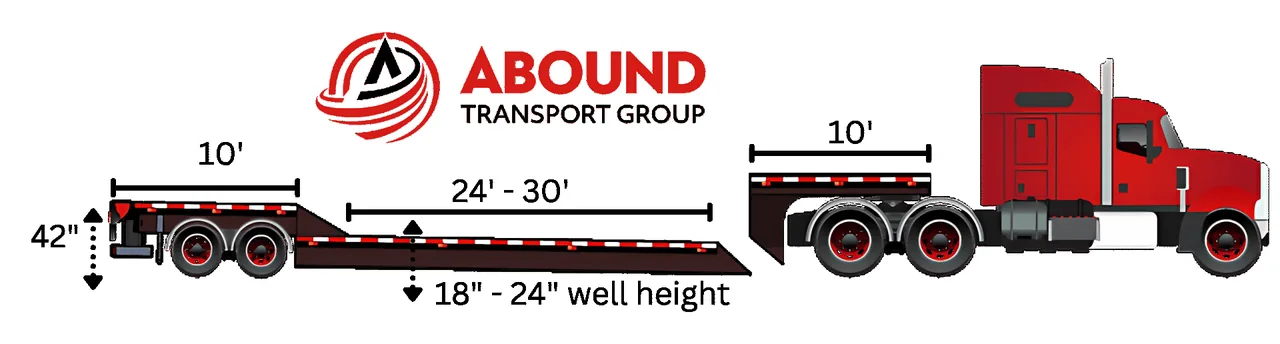
An RGN has a well 24 to 30 ft long and 102 in wide, sitting about 18 to 24 in off the road. That leaves about 11 ft 6 in to 12 ft of legal freight height. Typical legal freight weight is about 40,000 to 42,000 lbs, and 100,000+ lbs with added axles and permits.

Well length24 to 30 ft
Deck width102 in
Well heightAbout 18 to 24 in
Legal freight heightAbout 11 ft 6 in to 12 ft
Max freight weightAbout 40,000 to 42,000 lbs legal; 100,000+ lbs with added axles and permits
RGN removable gooseneck trailer dimensions diagram showing well length and 18 to 24 in well height, on a white background
See RGN Details

Key Features

  • Front gooseneck detaches so the trailer lowers into a drive-on ramp
  • Self-propelled equipment can load without a crane
  • Well about 18 to 24 in off the road
  • Added axles can take very heavy machinery under permit

Best Used For

  • Excavators, dozers, and cranes
  • Heavy construction equipment
  • Equipment that drives on
  • Loads that are very tall or very heavy

Open Deck

Double Drop / Lowboy

How big is a double drop trailer?

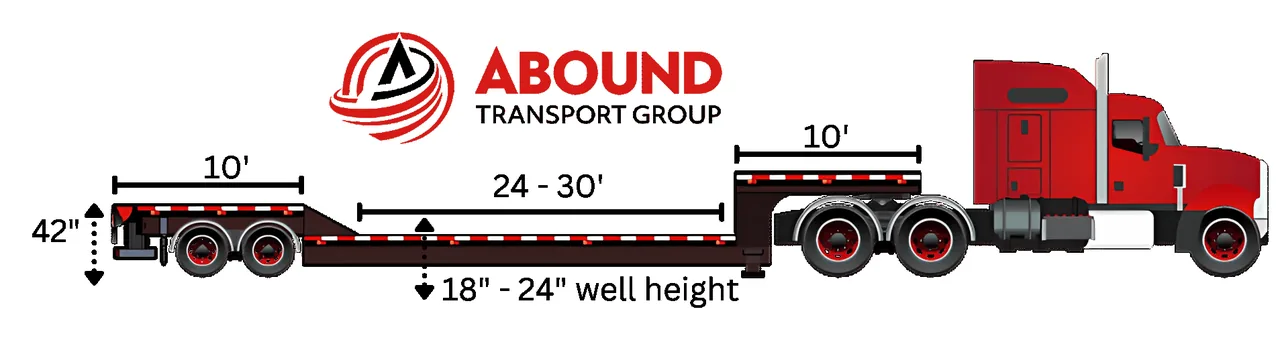
A double drop, also called a lowboy, has a well 24 to 30 ft long and 102 in wide, sitting about 18 to 24 in off the road. That leaves about 11 ft 6 in of legal freight height. Typical legal freight weight is about 40,000 lbs, and more with added axles and permits.

Well length24 to 30 ft
Deck width102 in
Well heightAbout 18 to 24 in
Legal freight heightAbout 11 ft 6 in
Max freight weightAbout 40,000 lbs legal; more with added axles and permits
Double drop lowboy trailer dimensions diagram showing the low center well height, on a white background
See Lowboy Details

Key Features

  • Two drops create a low center well about 18 to 24 in off the road
  • Gives the most legal height of any common trailer
  • Gooseneck is usually fixed, unlike an RGN
  • Loads by crane, forklift, or from the rear with ramps

Best Used For

  • Tall CNC machines
  • Transformers and industrial equipment
  • Freight taller than a step deck allows that loads by crane or forklift

Open Deck

Double Drop Stretch

How big is a double drop stretch trailer?

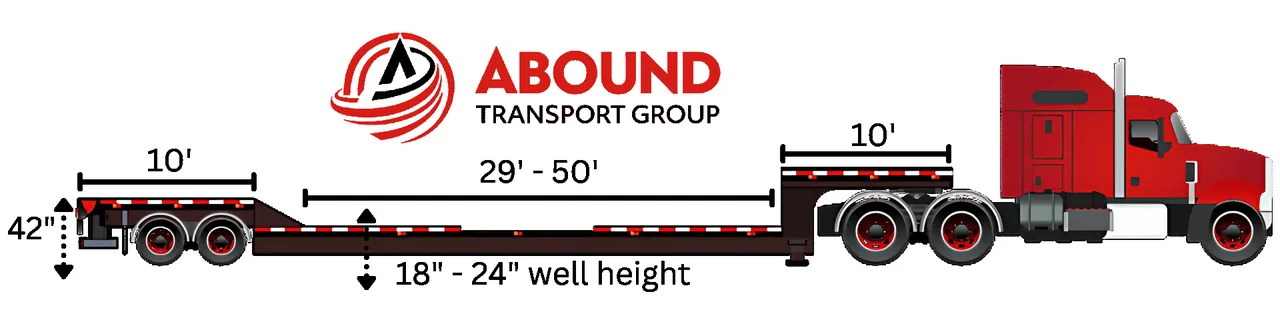
A double drop stretch well is about 29 ft closed and extends up to about 50 ft, with a 102 in width and a well about 18 to 24 in high. Legal freight height is about 11 ft 6 in, and typical legal freight weight is about 35,000 to 40,000 lbs.

Well lengthAbout 29 ft closed, up to about 50 ft extended
Deck width102 in
Well heightAbout 18 to 24 in
Legal freight heightAbout 11 ft 6 in
Max freight weightAbout 35,000 to 40,000 lbs legal
Double drop stretch trailer dimensions diagram with an extendable well, on a white background
See All Trailer Types

Key Features

  • Extendable well on a low double drop
  • About 29 ft closed, up to about 50 ft extended
  • Keeps the low well height for cargo up to about 11 ft 6 in tall
  • Supports loads that would otherwise overhang

Best Used For

  • Long tall machinery
  • Vessels and structural steel
  • Wind components and oversized construction equipment
  • Loads too long for a standard well and too tall for a step deck

Conestoga

Conestoga Flatbed

How big is a Conestoga flatbed trailer?

A Conestoga flatbed is 48 to 53 ft long, about 100 in wide inside, and about 96 to 102 in tall inside, with a deck about 60 in high. Typical freight weight is about 42,000 to 45,000 lbs. A rolling tarp slides forward to open the deck, then closes to protect freight from weather.

Deck length48 to 53 ft
Inside widthAbout 100 in
Inside heightAbout 96 to 102 in
Deck heightAbout 60 in
Max freight weightAbout 42,000 to 45,000 lbs
Conestoga flatbed trailer dimensions diagram with a rolling tarp and inside height callouts, on a white background
See Conestoga Details

Key Features

  • Rolling tarp on an open flatbed deck
  • Cover slides forward for side, rear, or top loading
  • Closes to protect freight from weather and road debris
  • Open-deck loading with van-like protection

Best Used For

  • Machinery and crates
  • Finished goods that must stay dry
  • Freight that needs a crane or forklift to load and must stay covered

Conestoga

Conestoga Step Deck

How big is a Conestoga step deck trailer?

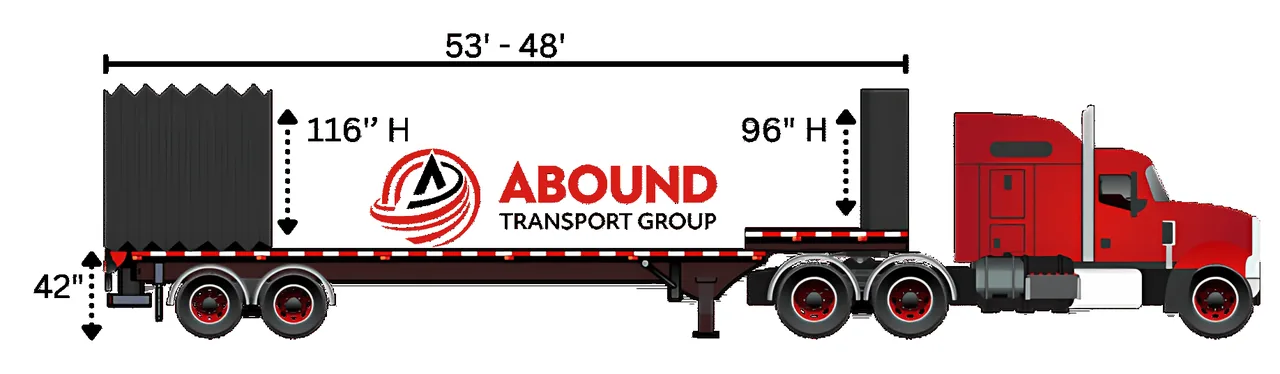
A Conestoga step deck is 48 to 53 ft long and about 100 in wide inside, with about 116 in of inside height on the lower deck and 96 in on the upper deck. The lower deck sits about 40 to 42 in high. Typical freight weight is about 42,000 to 44,000 lbs.

Deck length48 to 53 ft
Inside widthAbout 100 in
Inside heightAbout 116 in lower deck, 96 in upper deck
Deck heightAbout 40 to 42 in
Max freight weightAbout 42,000 to 44,000 lbs
Conestoga step deck trailer dimensions diagram with rolling tarp and lower-deck inside height, on a white background
See Conestoga Details

Key Features

  • Rolling tarp on a step deck
  • Shorter upper deck and a longer, lower main deck
  • About 116 in of inside height on the lower deck
  • Full cover without manual tarping

Best Used For

  • CNC machines and robotics
  • Tall loads that still ship without an over-height permit
  • Freight that needs cover and a lower deck

Conestoga

Conestoga Double Drop

How big is a Conestoga double drop trailer?

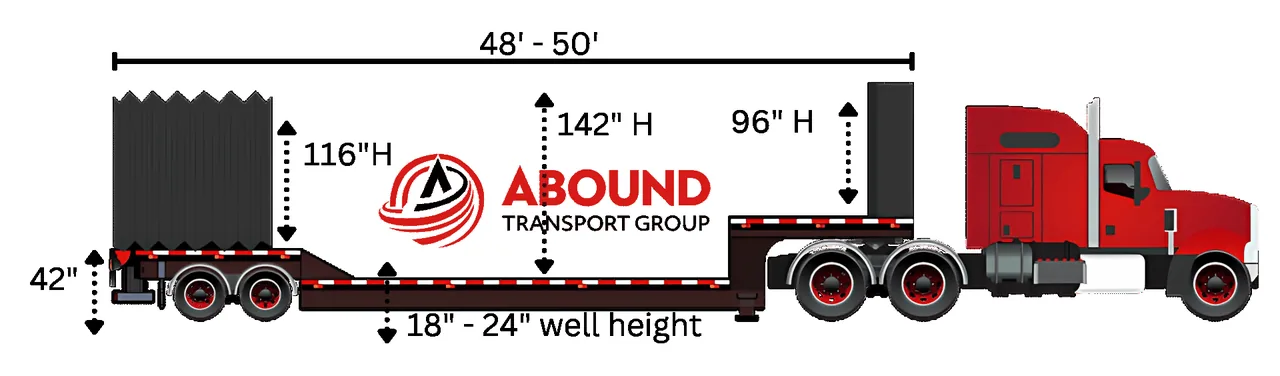
A Conestoga double drop is 48 to 50 ft long and about 100 in wide inside, with about 142 in of inside height in the well. The well sits about 18 to 24 in off the road. Typical freight weight is about 36,000 to 40,000 lbs.

Deck length48 to 50 ft
Inside widthAbout 100 in
Inside heightAbout 142 in in the well
Well heightAbout 18 to 24 in
Max freight weightAbout 36,000 to 40,000 lbs
Conestoga double drop trailer dimensions diagram showing the low well and rolling tarp, on a white background
See Conestoga Details

Key Features

  • Rolling tarp over the low well of a double drop
  • Well sits below the axles
  • Covered cargo up to about 11 ft 6 in tall can move without a height permit
  • Front and rear decks can carry smaller pieces alongside the main machine

Best Used For

  • Injection molders
  • Tall industrial machines
  • Freight too tall for a Conestoga step deck that must stay covered

Enclosed

Dry Van

How big is a dry van trailer?

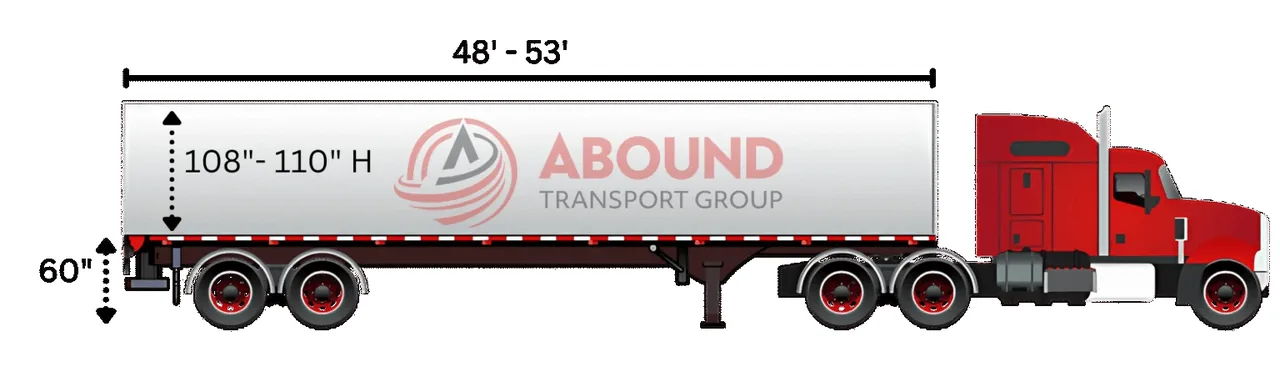
A dry van is 48 or 53 ft long (a 53 ft van is about 52 ft 6 in inside), about 98 to 101 in wide inside, and about 108 to 111 in tall inside. It loads from the rear through swing or roll doors. Typical freight weight is about 42,000 to 45,000 lbs.

Length48 or 53 ft (53 ft inside about 52 ft 6 in)
Inside widthAbout 98 to 101 in
Inside heightAbout 108 to 111 in
Door accessRear swing or roll doors
Max freight weightAbout 42,000 to 45,000 lbs
Dry van trailer dimensions diagram showing enclosed cargo length and inside height, on a white background
See Dry Van Details

Key Features

  • Fully enclosed, weatherproof box
  • Loads from the rear at a dock or with a liftgate
  • No temperature control
  • Protects general freight from weather and theft

Best Used For

  • Palletized freight
  • Boxed goods and crated parts
  • Freight that is palletized, fits through the doors, and loads at a dock

Enclosed

Reefer

How big is a reefer trailer?

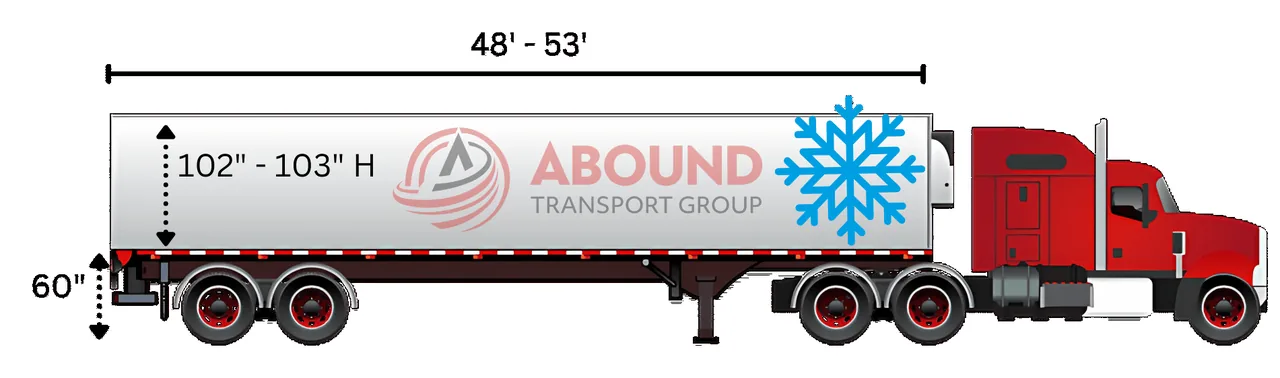
A reefer is 48 or 53 ft long, about 97 to 98 in wide inside, and about 102 to 104 in tall inside, with rear swing doors. Typical freight weight is about 42,000 to 44,000 lbs. Inside space is a little smaller than a dry van because of the insulation and the refrigeration unit.

Length48 or 53 ft
Inside widthAbout 97 to 98 in
Inside heightAbout 102 to 104 in
Door accessRear swing doors
Max freight weightAbout 42,000 to 44,000 lbs
Reefer trailer dimensions diagram showing insulated cargo inside height, on a white background
See Reefer Details

Key Features

  • Insulated van with a refrigeration unit on the front wall
  • Holds a set temperature for frozen, chilled, or temperature-sensitive freight
  • Inside dimensions are a little smaller than a dry van
  • Rear swing doors

Best Used For

  • Food and produce
  • Pharmaceuticals
  • Temperature-sensitive goods that must stay within a set range

Enclosed

Straight Truck

How big is a straight truck?

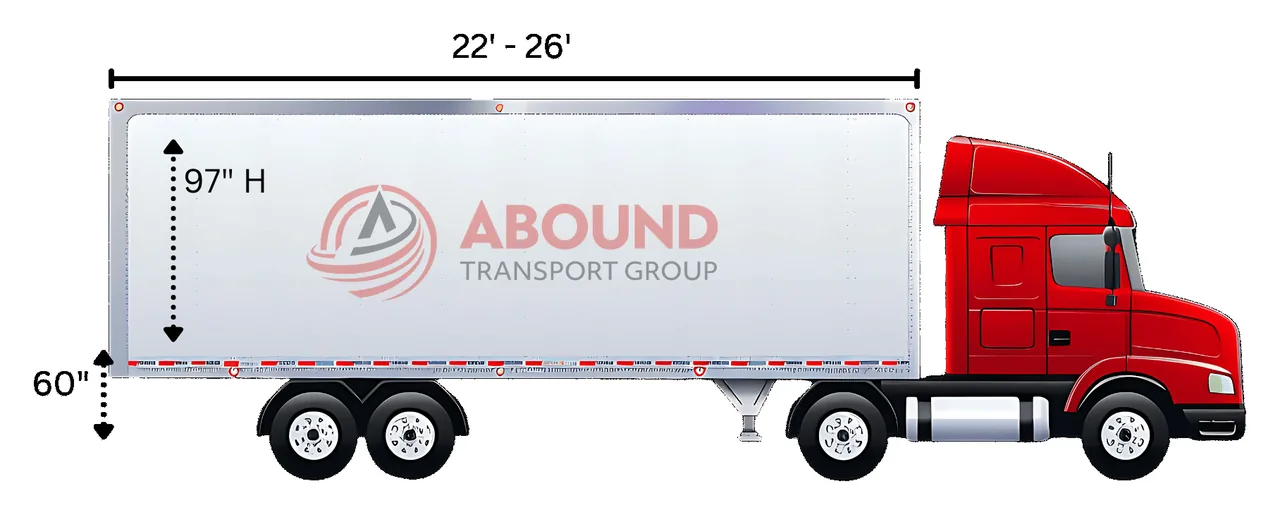
A straight truck has a 22 to 26 ft cargo box, about 96 to 97 in wide inside and about 97 in tall inside. It usually has a rear roll door and often a liftgate. Typical freight weight is about 7,000 to 10,000 lbs. The cab and box sit on one chassis, with no separate trailer.

Box length22 to 26 ft
Inside widthAbout 96 to 97 in
Inside heightAbout 97 in
Door accessRear roll door, liftgate common
Max freight weightAbout 7,000 to 10,000 lbs
Straight truck dimensions diagram showing the 22 to 26 ft cargo box, on a white background
See Straight Truck Details

Key Features

  • Cab and cargo box on one chassis, with no separate trailer
  • Can work at dock height
  • Often has a liftgate
  • Turns into city streets and residential areas where a semi cannot go

Best Used For

  • Pallets and appliances
  • Store and residential deliveries
  • Deliveries in a tight area, or loads that need a liftgate

Enclosed

Box Truck

How big is a box truck?

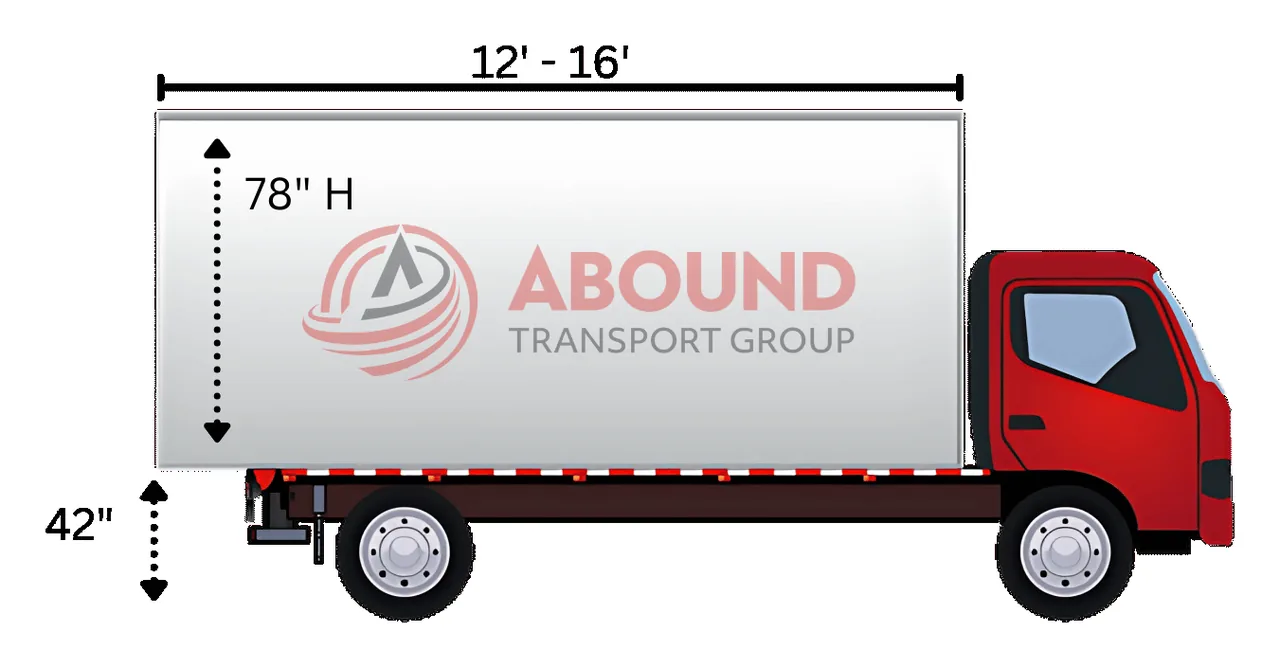
A box truck is a smaller straight truck with a 12 to 16 ft cargo box, about 91 in wide inside and about 78 in tall inside. It usually has a rear roll door and often a liftgate. Typical freight weight is about 3,500 to 4,300 lbs.

Box length12 to 16 ft
Inside widthAbout 91 in
Inside heightAbout 78 in
Door accessRear roll door, liftgate common
Max freight weightAbout 3,500 to 4,300 lbs
Box truck dimensions diagram showing a 12 to 16 ft cargo box, on a white background
See Box Truck Details

Key Features

  • Smaller straight truck with a 12 to 16 ft cargo box
  • Easy to maneuver
  • Often has a liftgate
  • Reaches locations a semi cannot access

Best Used For

  • A few pallets
  • Small equipment
  • Local deliveries at tight sites

Enclosed

Sprinter Van

How big is a Sprinter van?

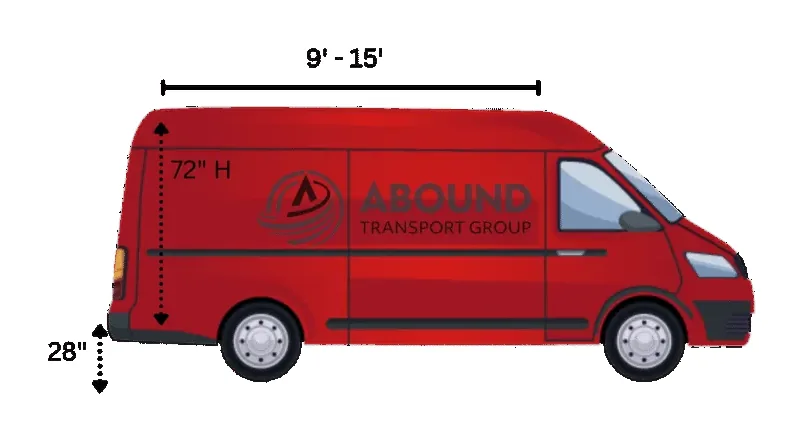
A Sprinter van cargo length is about 11 to 15 ft 9 in (133 to 189 in). Inside width is about 53 in between the wheel wells (70 in max). Inside height is about 68 in with a standard roof and 79 in with a high roof. Typical freight weight is about 3,300 to 6,800 lbs, by model.

Cargo lengthAbout 11 to 15 ft 9 in (133 to 189 in)
Inside widthAbout 53 in between wheel wells (70 in max)
Inside heightAbout 68 in standard roof, 79 in high roof
Door accessRear and side doors
Max freight weightAbout 3,300 to 6,800 lbs, by model
Sprinter van cargo dimensions diagram showing cargo length and inside height, on a white background
See Sprinter Van Details

Key Features

  • Fully enclosed cargo van for expedited freight
  • Reaches urban loading zones, tight warehouses, and residential addresses
  • Rear and side doors
  • Sized for small components, high-value parts, and urgent shipments

Best Used For

  • Urgent parts
  • Small crates and a few pallets
  • Small, time-critical shipments

Quick Reference

Oversize Thresholds

These are the common triggers for permits on U.S. lanes. Exact rules vary by state and route, so the Abound team confirms them for the lane you are shipping.

WidthOver 102 in (8 ft 6 in)

Oversize on the National Network, per 23 CFR 658.15. An oversize permit is required. Escort rules vary by state, so the desk checks them against the route.

HeightVaries by state, 13 ft 6 in to 14 ft in most

There is no single federal height limit. State legal heights are 13 ft 6 in to 14 ft in most states. Check the route on our height map before you request a quote.

WeightOver 80,000 lbs gross

Overweight on the Interstate, per 23 CFR 658.17. Federal axle limits are 20,000 lbs on a single axle and 34,000 lbs on a tandem. Extra axles and a permit may be needed.

Super loadDefined by each state

Very wide, tall, or heavy shipments can be treated as super loads. Extra planning, escorts, or route restrictions may apply. The desk confirms the rules for the lane you are shipping.

Open Deck Planning

Securement and Tarps

Proper securement is the carrier's responsibility. Knowing the usual methods helps you share what the freight needs. The Abound desk notes tarp and securement needs when matching a carrier. Confirm the carrier is qualified and has the right equipment before pickup.

EquipmentStraps and tiedowns

Used to secure loads on flatbeds and other open-deck trailers. The number of straps depends on the freight size and weight. Always confirm the count needed for each load with the desk before pickup.

EquipmentChains

Used like straps for heavier freight such as machinery. Edge protectors should be used with chains when needed to prevent damage. Confirm the chain setup with the desk before pickup.

EquipmentV-boards and edge protectors

Placed between the load and the straps or chains to protect freight from scratches and to keep the straps from being cut. Ask for them when the cargo has sharp corners or a finished surface.

EquipmentBlocking and bracing

Material used to keep freight from shifting. Lumber or similar dunnage is often placed between pieces so they stay separated and can be unloaded safely. Tell the desk if the load needs extra bracing.

WeatherTarps

Use a tarp when freight is sensitive to rain, snow, or road debris, or when the shipper requires weather protection. Steel, lumber, and other durable cargo sometimes move without a tarp. A Conestoga adds a rolling cover.

WeatherTarp types

Lumber tarps, steel tarps, and smoke tarps are the common covers used on open-deck freight. The type depends on how much of the load needs cover and whether water can reach the cargo. Tell the desk if the freight needs a specific tarp.

How to Choose

How Do You Choose the Right Trailer?

Start with the freight's height, length, and weight, then how it loads and whether it must stay dry. Those answers usually point to one or two trailer types.

Start With Height

Add the freight height to the deck height. State legal heights are 13 ft 6 in to 14 ft in most states, so the same load can be legal on one lane and over-height on another. If the total runs over the route limit, a lower deck is usually cheaper than an over-height permit. Check route clearances on our height map.

Check Length and Overhang

Standard decks are 48 or 53 ft. Freight that hangs past the deck may need flags, lights, or a permit, depending on the state. A stretch trailer supports the full length instead of leaving it to hang.

Add Up the Weight

Federal rules cap gross weight at 80,000 lbs on the Interstate, and that includes the truck and trailer. That is why most semis carry about 40,000 to 48,000 lbs of freight. Heavier loads need more axles and an overweight permit.

Plan Loading and Weather

Drive-on equipment suits an RGN. Crane or forklift loading works on flatbeds, step decks, and double drops. Freight that must stay dry needs a tarp or a Conestoga, and dock freight belongs in a van.

Quick Compare

How Do Trailer Dimensions Compare?

Most freight trailers are 102 inches wide. What changes is length, deck height, and how much weight the trailer can carry. Deck height matters most: the lower the deck, the taller the freight can be before it needs a permit.

Typical trailer dimensions and freight limits (tap a trailer to open its specs)
TrailerLengthWidthDeck HeightLegal freight heightTypical Max Freight
Open Deck Trailers
Hotshot30 to 40 ft102 inAbout 33 to 36 inAbout 10 ft 6 inAbout 12,000 to 17,000 lbs
Flatbed48 or 53 ft (45 ft available)102 inAbout 60 inAbout 8 ft 6 inAbout 48,000 lbs
Flatbed Stretch48 ft closed, up to about 80 ft extended102 inAbout 60 inAbout 8 ft 6 inAbout 43,000 to 45,000 lbs
Step Deck48 or 53 ft (upper 10 to 11 ft, lower 38 to 42 ft)102 inAbout 38 to 42 in (lower deck)About 10 ftAbout 43,000 to 48,000 lbs
Low Profile Step Deck45 to 53 ft102 inAbout 30 to 36 inAbout 10 ft 6 in to 11 ftAbout 42,000 to 48,000 lbs
Tri-Axle Step Deck48 to 53 ft102 inAbout 40 to 42 inAbout 10 ftAbout 45,000 to 50,000 lbs legal; more with an overweight permit
Step Deck Stretch48 ft closed, up to about 76 ft extended102 inAbout 28 to 42 inAbout 10 to 11 ftAbout 40,000 lbs
Removable Gooseneck (RGN)24 to 30 ft102 inAbout 18 to 24 inAbout 11 ft 6 in to 12 ftAbout 40,000 to 42,000 lbs legal; 100,000+ lbs with added axles and permits
Double Drop / Lowboy24 to 30 ft102 inAbout 18 to 24 inAbout 11 ft 6 inAbout 40,000 lbs legal; more with added axles and permits
Double Drop StretchAbout 29 ft closed, up to about 50 ft extended102 inAbout 18 to 24 inAbout 11 ft 6 inAbout 35,000 to 40,000 lbs legal
Conestoga Trailers
Conestoga Flatbed48 to 53 ftAbout 100 in insideAbout 60 inAbout 96 to 102 in insideAbout 42,000 to 45,000 lbs
Conestoga Step Deck48 to 53 ftAbout 100 in insideAbout 40 to 42 inAbout 116 in inside (lower deck)About 42,000 to 44,000 lbs
Conestoga Double Drop48 to 50 ftAbout 100 in insideAbout 18 to 24 inAbout 142 in insideAbout 36,000 to 40,000 lbs
Enclosed Trucks and Vans
Dry Van48 or 53 ft (53 ft inside about 52 ft 6 in)About 98 to 101 in insideDock heightAbout 108 to 111 in insideAbout 42,000 to 45,000 lbs
Reefer48 or 53 ftAbout 97 to 98 in insideDock heightAbout 102 to 104 in insideAbout 42,000 to 44,000 lbs
Straight Truck22 to 26 ftAbout 96 to 97 in insideDock heightAbout 97 in insideAbout 7,000 to 10,000 lbs
Box Truck12 to 16 ftAbout 91 in insideDock heightAbout 78 in insideAbout 3,500 to 4,300 lbs
Sprinter VanAbout 11 to 15 ft 9 in (133 to 189 in)About 53 in between wheel wells (70 in max)Dock heightAbout 68 in standard roof, 79 in high roofAbout 3,300 to 6,800 lbs, by model

Legal freight height figures on this page assume a 13 ft 6 in state limit, the most common cap. Legal freight height varies by state (13 ft 6 in to 14 ft in most states). A few states allow 14 ft 6 in or 15 ft, including Colorado and Nebraska at 14 ft 6 in and Alaska at 15 ft, which is why limits vary by route. Check each state's limit on our height map. Figures are typical ranges and vary by manufacturer, configuration, and state rules.

Get a Quote

Get a Freight Quote Now

Share the lane and the freight. The Abound team replies with the trailer, the permits, and a quote.

Get a Freight Quote

FAQ

Common Questions About Trailer Dimensions

What Are Standard Flatbed Trailer Dimensions?
A standard flatbed is 48 or 53 ft long and 102 in wide, with a deck about 60 in off the road. That leaves about 8 ft 6 in of legal freight height, because legal height varies by state (13 ft 6 in to 14 ft in most states), and most flatbeds carry about 48,000 lbs of freight.
How Tall Can Freight Be on a Step Deck Trailer?
The lower deck of a standard step deck sits about 38 to 42 in high, so freight up to about 10 ft tall usually stays legal. Legal height varies by state (13 ft 6 in to 14 ft in most states). A low profile step deck adds a few inches. Taller freight usually moves to a double drop or RGN.
What is the difference between a flatbed and a step deck?
A flatbed deck sits about 60 in high, leaving about 8 ft 6 in of legal freight height. A step deck has a short upper deck and a lower main deck about 38 to 42 in high, leaving about 10 ft. Choose a step deck when freight is too tall for a flatbed but still loads by crane or forklift.
How do you figure legal freight height?
Add the freight height to the deck or well height, then compare the total with the lowest state height limit on the route. Legal height is 13 ft 6 in to 14 ft in most states, and there is no single federal height limit. The legal freight height figures on this page assume a 13 ft 6 in state limit.
What Is the Difference Between an RGN and a Double Drop?
Both have a low well about 18 to 24 in off the road. An RGN's gooseneck detaches so equipment can drive on from the front. A double drop has a fixed neck, so freight loads by crane, forklift, or from the rear.
How big is an RGN trailer?
An RGN well is 24 to 30 ft long and 102 in wide, about 18 to 24 in off the road. Legal freight height is about 11 ft 6 in to 12 ft. Typical legal freight weight is about 40,000 to 42,000 lbs, or more with added axles and permits. The gooseneck detaches for drive-on loading.
What are Conestoga trailer dimensions?
A Conestoga flatbed is 48 to 53 ft long, about 100 in wide inside, and about 96 to 102 in tall inside. A Conestoga step deck gives about 116 in of inside height on the lower deck. A Conestoga double drop well is about 142 in tall inside.
How long can a stretch trailer extend?
A stretch flatbed is 48 ft closed and extends to about 80 ft. A step deck stretch is 48 ft closed and extends to about 76 ft. Deck heights are about 60 in and about 28 to 42 in, with typical freight weights of about 43,000 to 45,000 lbs and about 40,000 lbs.
What Is the Legal Width for a Truck and Trailer?
Federal rules set 102 in (8 ft 6 in) as the width states must allow on the National Network, per 23 CFR 658.15. Freight wider than that needs an oversize permit, and very wide loads can also need escort vehicles, depending on the state.
How Much Weight Can a Semi Trailer Carry?
The federal gross limit on the Interstate is 80,000 lbs for the truck, trailer, and freight together, per 23 CFR 658.17. After the truck and trailer weight, most semis carry about 40,000 to 48,000 lbs of freight. Heavier loads need more axles and an overweight permit.
When Does a Load Need an Oversize Permit?
A load needs a permit when it is wider than 102 in, taller than the state height limit (13 ft 6 in to 14 ft in most states), longer than the state allows, or heavier than legal axle and gross weights. Each state sets the rules, and the carrier holds the permit. See our permit and escort rules by state.
What Are the Inside Dimensions of a 53 Foot Dry Van?
A 53 ft dry van is about 52 ft 6 in long inside, about 98 to 101 in wide, and about 108 to 111 in tall, depending on the build. Door openings are a little smaller than the inside, so measure tall freight against the door, too.
What Do You Need to Quote the Right Trailer?
Send the pickup and delivery ZIP codes, the freight's length, width, height, and weight, how it loads and unloads, and the ready date. Photos help, and so do any dock, tarp, or permit notes. The Abound team matches the trailer and replies with a freight quote.

Get a Quote

Not Sure Which Trailer Fits Your Freight?

Send the lane, the freight, and the dimensions. The Abound team replies with the trailer, the permits, and a quote. Extra cargo coverage is available for high-value loads at an added cost.

Get a Freight Quote Call (800) 957-2558

Sources