
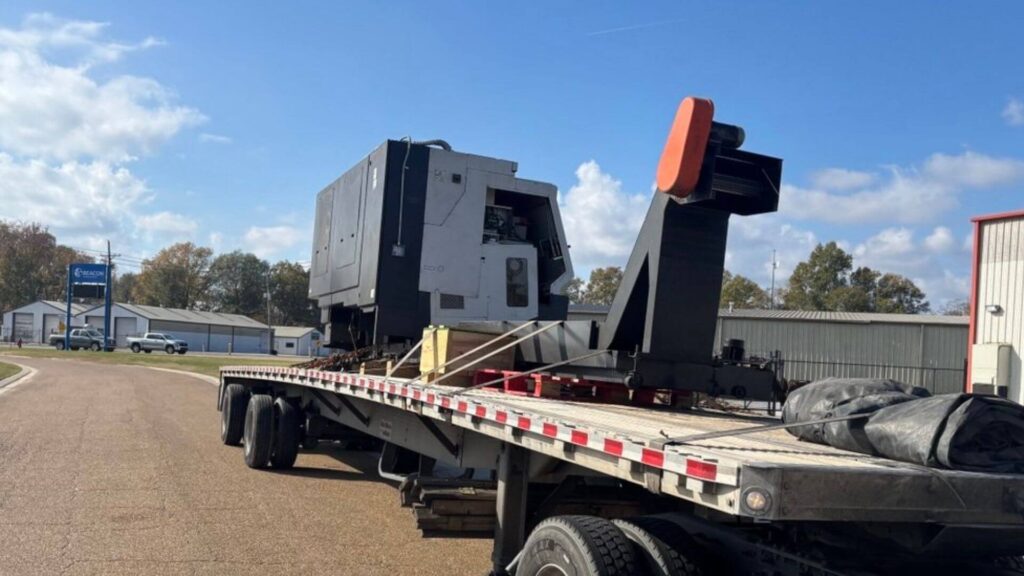
A CNC Machine Is Not a Pallet. Treat the Move Accordingly.
A vertical machining center calibrated to half-thousandth tolerances does not forgive a rough ride, a wet tarp draped over the control panel, or a driver who does not know how to block an off-center load. One bad move can knock a spindle out of alignment, crack a casting, or saturate an electrical cabinet with road moisture.
The difference between a machine that arrives ready to run and one that arrives with a repair bill is almost always preparation. Not the carrier’s preparation, yours.
This checklist walks you through every step of a CNC machine move, from measuring and documenting before the truck arrives to what to inspect before you sign the delivery receipt. Use it every time you ship a machine.
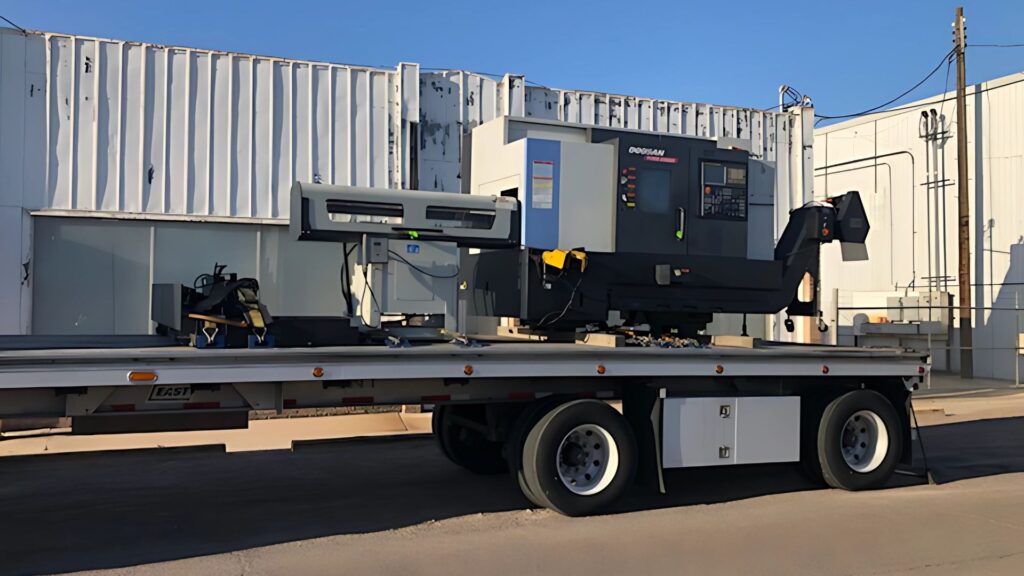
Before the Truck Arrives
Step 1: Get Accurate Dimensions and Weight
This is not optional and it is not something to estimate. Inaccurate dimensions produce the wrong trailer, the wrong permits, and the wrong quote. Before you contact a freight broker, have these numbers confirmed:
- Length: machine footprint including any chip conveyor, coolant tank, or attached peripherals
- Width: at the widest point, including any outboard components
- Height: to the tallest point, including the control pendant if it cannot be folded
- Weight: operating weight from the manufacturer’s spec sheet, or weighed directly if you have access to a scale
These numbers determine whether you need a flatbed, step deck, double drop, or RGN. They also determine whether oversize permits are required. A machine that measures 102 inches tall on a step deck’s 42-inch lower deck results in a total height of 144 inches, which is under the 13.5-foot threshold in most states without a permit. Get one measurement wrong and that math changes.
If you have the machine model number, send it to us. We maintain spec data on common CNC brands and can often confirm dimensions from the model number alone.
See our CNC machine transport services here.
Step 2: Choose the Right Trailer Before You Quote
The trailer your machine needs should be determined before you request quotes, not after. Here is the framework:
| Machine Height on Skid | Recommended Trailer |
|---|---|
| Under 84 inches (7 feet) | Flatbed or Conestoga Flatbed |
| 84 to 102 inches, no sensitive surfaces | Step Deck |
| 84 to 116 inches, enclosures, glass, or panels | Conestoga Step Deck |
| Over 116 inches, or over 48,000 lbs | Double Drop / RGN |
| Under 15,000 lbs, urgent move | Hotshot |
When to use a Conestoga: Any machine with a painted enclosure, exterior glass windows, an operator control panel on the exterior, or exposed electronics should travel on a Conestoga. The rolling tarp system fully encloses the machine without touching its surface. A canvas tarp draped directly over a Haas or Mazak enclosure will abrade painted surfaces, trap moisture against glass, and contact every raised component over hundreds of miles. The Conestoga eliminates that entirely.
See all trailer types and specs here.
Step 3: Document the Machine’s Condition Before Pickup
Walk around the machine with your phone and photograph every side before the truck arrives. Capture:
- All four sides of the enclosure
- The control panel and operator interface
- Any existing damage, scratches, dents, or cracks
- The coolant tank, chip conveyor, and any attached peripherals
- The loading process itself if you can
These photos are your proof of pre-shipment condition. If there is a damage dispute at delivery, the photos taken at origin are what supports your claim. A signed delivery receipt with no noted damage and no origin photos leaves you with very limited recourse.
Step 4: Prepare the Machine for Transit
Do not hand a machine over to a carrier that has not been prepared for transport. Here is what needs to happen before loading:
Drain the coolant tank. Coolant shifts during transport, creates instability, and can freeze in winter transit. Drain or reduce the tank to the lowest safe level.
Lock or block all axes. Most CNC machines have transport locking bolts for the X, Y, and Z axes. Use them. If your machine does not have factory locks, the axes need to be mechanically blocked so they cannot travel during transit. Unsecured axis movement is one of the leading causes of transit damage on vertical machining centers.
Remove tooling from the spindle and turret. Tool holders and probes are not designed to absorb vibration. Remove them and pack them separately.
Secure the control pendant. If the pendant arm can swing freely, strap or tape it close to the machine body. Pendant arm damage on transit is preventable and common.
Disconnect and secure all cabling. Any external cabling or hoses that are not integral to the machine body should be tied off so they cannot snag during loading or transit.
Step 5: Confirm Rigging at Pickup
The freight carrier and the rigging crew are two separate services. The truck positions the trailer. The rigger or crane operator loads the machine. Both have to be coordinated to arrive at the same time.
When they are not, you get a truck sitting at the pickup location for two hours waiting on a rigger, which means detention fees. Or a rigging crew ready to load with no truck in position, which wastes the seller’s time and yours.
At Abound Transport Group, we coordinate directly with the rigging crew at pickup. We confirm crane or forklift availability, the loading window, and the truck staging position before dispatch. If you need a rigger and do not have one, ask us for a recommendation.
See industrial riggers network here.
Step 6: Get the Right Insurance in Place
Standard carrier liability is required by law and covers a minimum of $100,000 per load. On a $200,000 CNC machine, that is barely half the machine’s value, and standard carrier liability excludes many of the most common causes of transit damage including disputes over loading responsibility and acts of God.
All-risk cargo insurance covers the full value. For any machine worth more than $50,000, this is not optional. It is the only real protection you have if something goes wrong.
Abound Transport Group offers all-risk cargo coverage up to $2.5 million per shipment, with same-day certificate issuance.
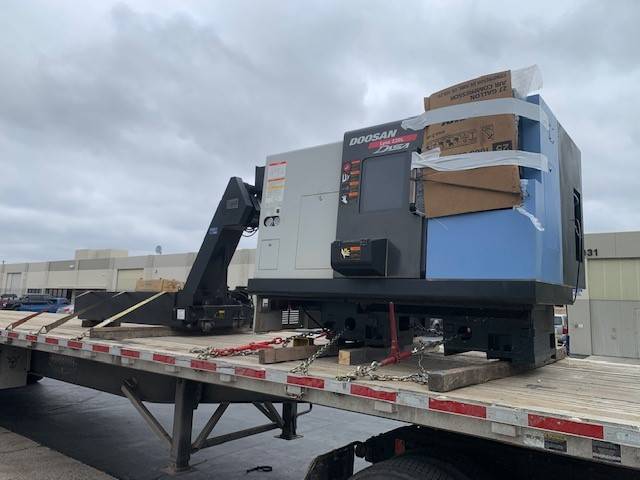
At Pickup
Step 7: Request Securement Photos Before the Truck Leaves
Once the machine is loaded, strapped, and covered, ask the driver or the rigging crew to send you photos of the secured load before the truck leaves the property. You want to see:
- The machine positioned on the trailer
- All straps, chains, and binders in place
- Edge protection at every strap contact point
- The Conestoga or tarp fully closed and sealed
If the securement looks wrong in photos, that is the time to address it, not at delivery 1,200 miles later.
Step 8: Confirm the Bill of Lading is Complete
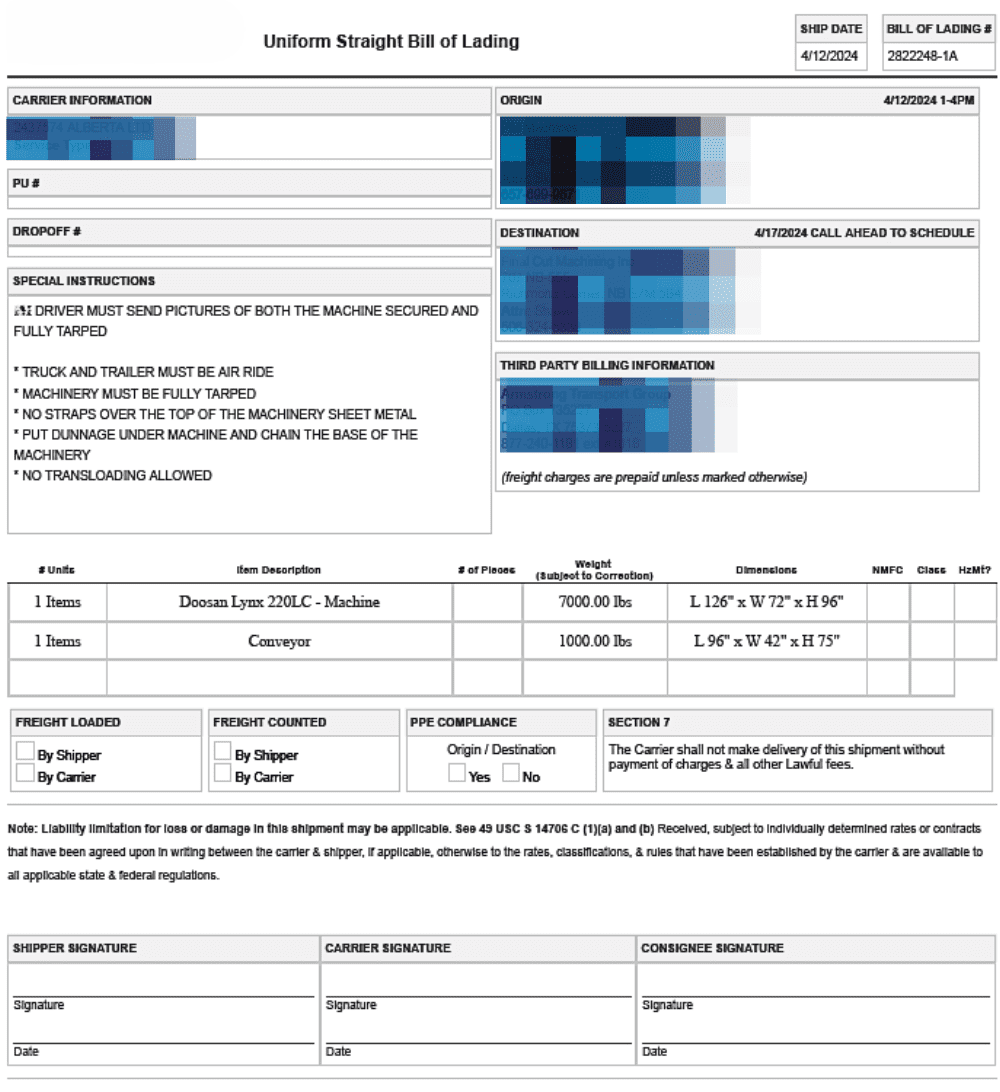
The Bill of Lading (BOL) is the legal document that records the condition of the freight at origin and transfer of responsibility to the carrier. Before the truck leaves, confirm the BOL includes:
- Accurate machine description, dimensions, and weight
- Any pre-existing damage noted explicitly
- Pickup and delivery addresses
- Shipper and carrier signatures
Do not let the truck leave without a signed BOL. A BOL with no noted pre-existing damage and no origin photos is a clean slate that benefits the carrier in any dispute.
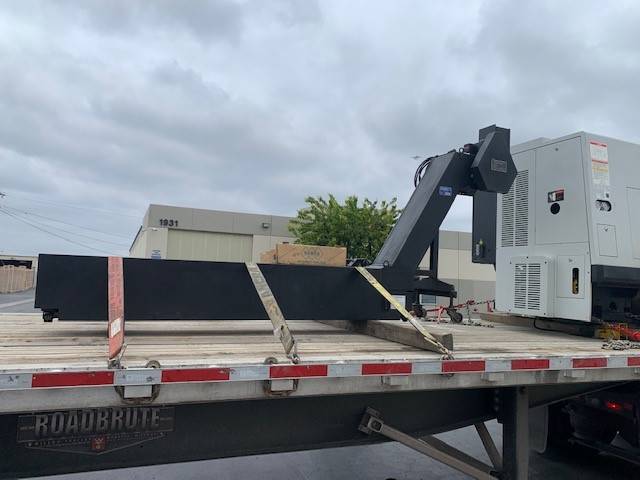
In Transit
Step 9: Use Real-Time Tracking
At Abound Transport Group, every shipment is tracked in real time through the ATGFr8 portal with GPS updates every 15 minutes. You should always know where your machine is and have a delivery ETA you can plan your rigging or forklift schedule around.
If your broker cannot provide tracking, ask why. For a machine worth six figures, real-time visibility is not a luxury.
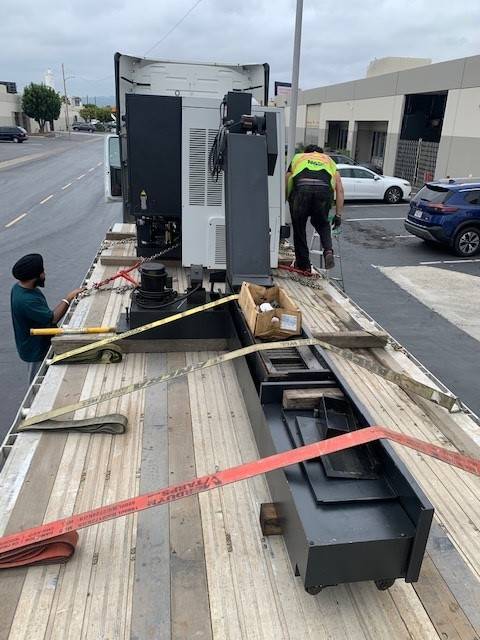
Step 10: Communicate Any Delivery Access Constraints Early
If your facility has low overhead clearance, a narrow gate, limited forklift capacity, or any other access constraint, tell your broker before dispatch. A Conestoga step deck needs adequate clearance to open the tarp system. An RGN needs room to drop the gooseneck. A machine being placed inside a building needs the right forklift or crane staged and ready.
Surprises at delivery cost money. Access information shared upfront costs nothing.
At Delivery
Step 11: Inspect Before You Sign
This is the most important step most buyers skip. Before you sign the delivery receipt and before anything is unloaded:
Walk around the machine on the trailer. Check every side of the enclosure, the control panel, the coolant tank, and any exterior components. Compare what you see to the photos you took at origin. Look for:
- Cracked or dented enclosure panels
- Broken glass or damaged pendant
- Fluid leaks or visible impact damage
- Any securement damage to the machine’s base or mounting points
If you find damage, note it on the Bill of Lading in writing before signing. Be specific: “dent on right enclosure panel, approximately 4 inches” is useful. “Possible damage” is not.
A signed clean Bill of Lading is the carrier’s strongest defense against a damage claim. Once you sign it, your options narrow significantly.
Step 12: Let the Machine Acclimate Before Powering Up
If the machine traveled through significant temperature changes, particularly in winter or if moving between climate extremes, give it several hours to acclimate to your shop temperature before powering up. Cold electronics brought into a heated shop develop condensation inside the electrical cabinet. Let the moisture dissipate before you run a startup sequence.
Check fluid levels, inspect for any mechanical issues, and run a light verification cycle before returning the machine to full production.
CNC Machine Transport Checklist: Quick Reference
Print this out and keep it with every machinery purchase:
Before the truck arrives:
- Confirm accurate dimensions and weight
- Select correct trailer type
- Photograph machine condition from all sides
- Drain coolant, lock axes, remove tooling, secure pendant
- Confirm rigging crew at pickup
- Secure all-risk cargo insurance
At pickup:
- Request securement and tarp photos before truck departs
- Confirm BOL is complete with pre-existing damage noted and both parties signed
In transit:
- Use real-time tracking link
- Communicate delivery access constraints to your broker
At delivery:
- Inspect machine on trailer before signing the BOL
- Note any damage in writing on the BOL before signing
- Coordinate offloading rigging in advance
- Allow machine to acclimate before power-up
Abound Transport Group Moves CNC Machines Every Day
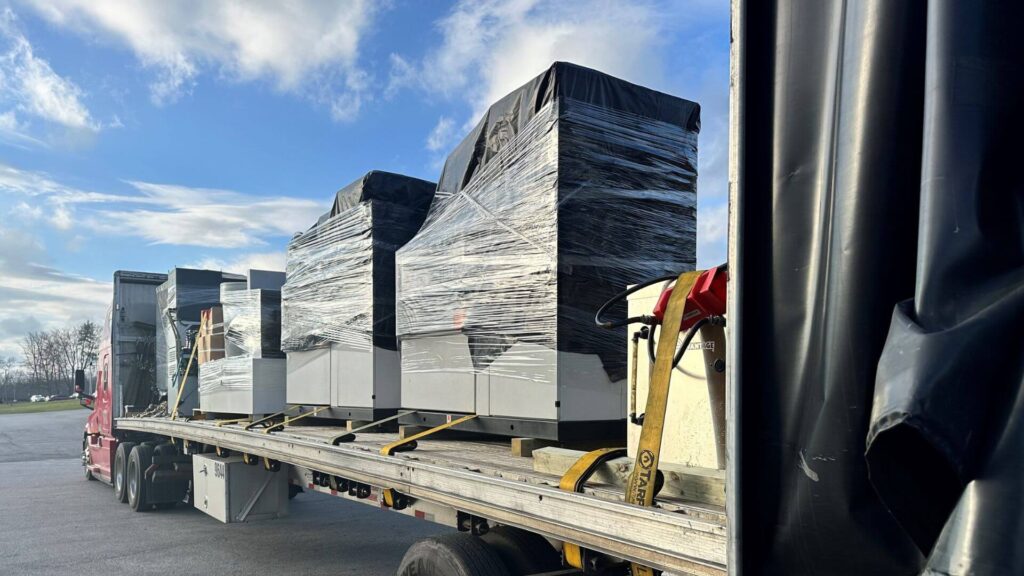
We ship Haas, Mazak, Okuma, DMG MORI, DN Solutions, Hurco, Matsuura, Makino, and every other major CNC brand. Our team coordinates trailer selection, rigging, permits, and insurance so you do not have to manage five different vendors for a single machine move.
One agent. One quote. One point of contact from pickup to delivery confirmation.
Get a custom CNC machine transport quote.
(800) 957-2558 | Monday to Friday, 5:30 AM to 5:00 PM PST
Frequently Asked Questions
Document the machine's condition with photos from all sides before the truck arrives, and confirm the machine has been properly prepared for transit: coolant drained, axes locked, tooling removed, and pendant secured. These two steps together protect you if anything goes wrong in transit.
No. Domestic CNC machine transport on open-deck trailers does not typically require crating. The machine is secured directly to the trailer deck on skids with chains, straps, and edge protection. Crating is more common for international or air freight shipments.
A Conestoga flatbed or Conestoga step deck depending on the machine's height. The Conestoga's rolling tarp system fully encloses the machine without tarp-to-surface contact, which protects painted panels, glass windows, and exterior electronics from abrasion and moisture. A canvas tarp draped directly over an enclosed CNC machine causes surface damage over long hauls.
Document the damage on the Bill of Lading before signing and before unloading. Photograph everything. Contact your freight broker immediately. If you have all-risk cargo insurance, your broker initiates the claim process. If you only have standard carrier liability, the carrier's legal team will evaluate the claim against the exclusions in the policy, which is why all-risk coverage is strongly recommended for machines over $50,000.
Measure the machine's height including any coolant tank, chip conveyor, or pendant that cannot be removed. If the height is under 84 inches, a flatbed or Conestoga flatbed typically works. From 84 to 116 inches, a step deck or Conestoga step deck is required. Over 116 inches or over 48,000 lbs, a double drop or RGN is needed. When in doubt, share the machine model with your broker and they can confirm.
If the chip conveyor adds significant width or height, removing it before transport may reduce the cost and trailer requirements. For machines where the conveyor pushes the width over 8.5 feet or the height into permit territory, removal at origin and shipping it separately often makes sense. Your broker can advise based on the specific machine specs.