
Introduction
When it comes to shipping a CNC machine, most of the conversation centers on the right trailer, flatbed, step deck, or double drop. But there’s a second decision that gets far less attention and causes far more damage: how is your machine going to be covered?
Tarps and Conestoga rolling systems are both capable of protecting freight. But CNC machinery isn’t just freight. It’s precision equipment worth tens of thousands, sometimes hundreds of thousands, of dollars, with machined surfaces, sensitive control cabinets, spindles, coolant systems, and tight tolerances that can be compromised by even minor transit damage.
The wrong cover choice doesn’t just scratch a panel. It can put a machine out of commission, trigger a warranty dispute, or delay a production startup by weeks.
This guide breaks down exactly what tarping involves, where it falls short on CNC equipment, what a Conestoga actually does differently, and how to decide which one is right for your specific situation.
What Tarping a CNC Machine Actually Looks Like
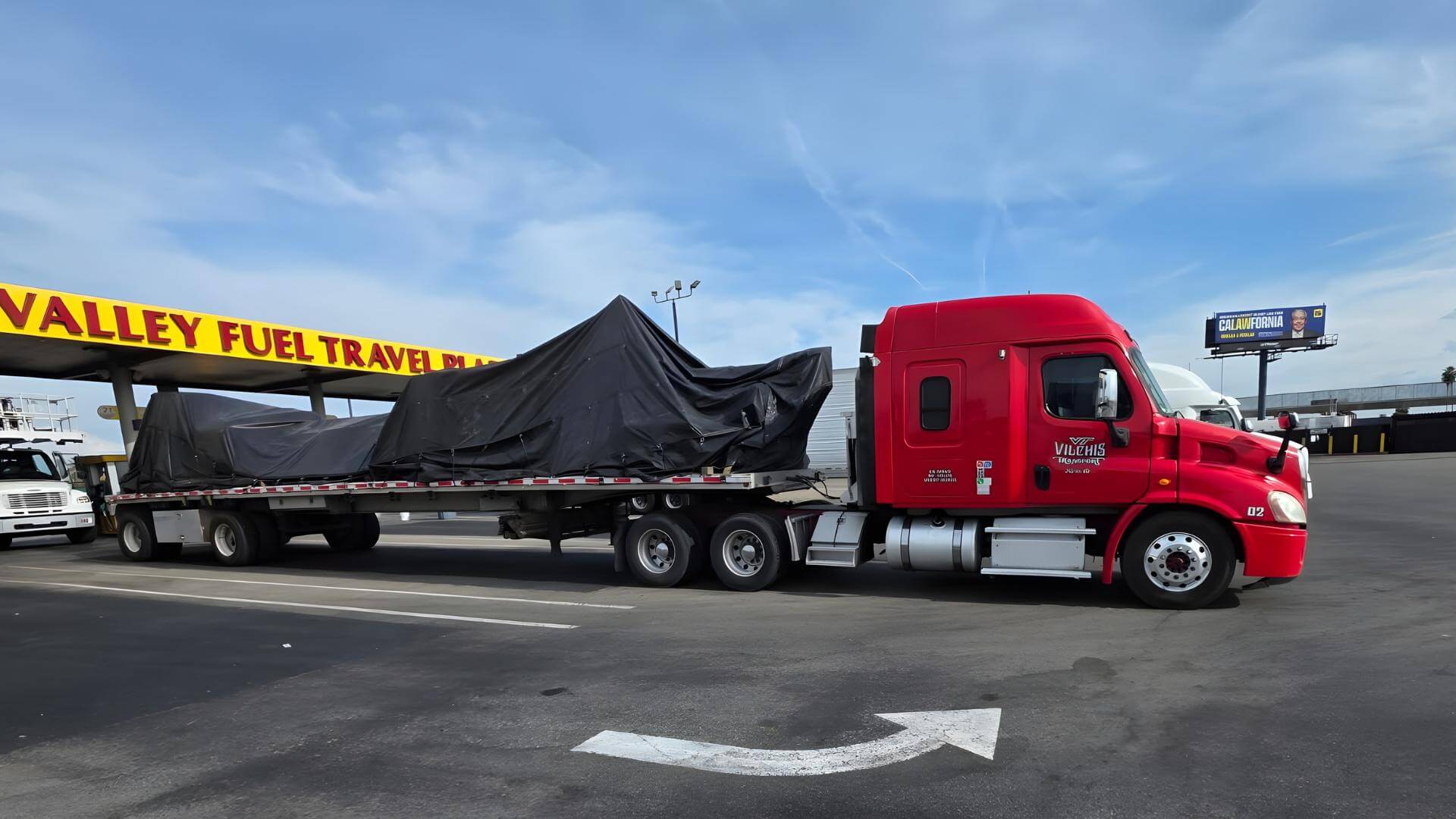
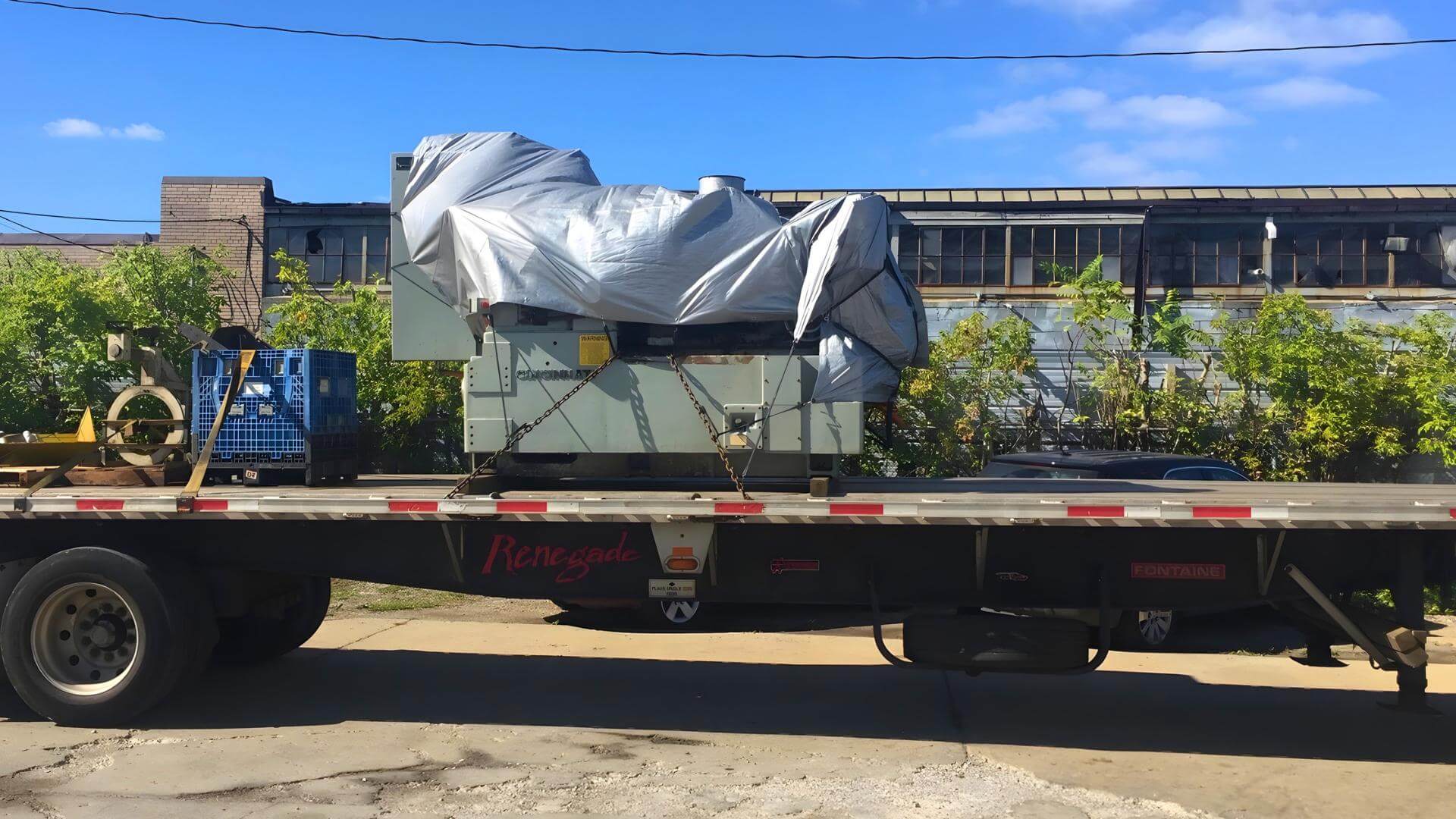
When a flatbed or step deck carrier tarps a load, a driver manually applies heavy canvas or vinyl tarps, typically 4 ft, 6 ft, 8 ft, or 10 ft, and secures them with straps, hooks, and bungee cords. For taller CNC machines on a step deck, you’re often looking at a full 10 ft tarp draped over the profile of the machine, tied down at multiple points.
Here’s the reality: there is no universal standard for how a driver tarp a load. Every driver does it differently. Some are meticulous. Some are experienced specifically with machinery. Others are not, and there’s no way to know which one you’re getting until the truck shows up.
On long hauls across multiple states, a driver may stop and retarp if something shifts or tears. Or they may not notice until delivery.
VS
The Real Risks of Tarping CNC Machinery
Tarp Rash
This is the big one. When a canvas tarp isn’t perfectly secured, or when wind causes it to flex and move during transit, the abrasive surface of the tarp drags across the machine. On a painted steel cabinet, that’s a cosmetic issue. On a machined casting, a precision ground surface, or a spindle housing, that’s potential functional damage. Tarp rash on a Haas or Mazak control cabinet isn’t just ugly, it’s a conversation you don’t want to have with a buyer or a receiving plant.
Improper Coverage on Complex Profiles
CNC machines are rarely a simple rectangular box. Vertical machining centers have spindle heads, tool changers, and chip augers that protrude at odd angles. Horizontal boring mills have overhanging components. Injection molders have platens, tie bars, and nozzle assemblies. Getting a flat tarp to conform to these profiles and stay there for 1,500 miles is genuinely difficult. Gaps happen. Water, road spray, and highway grit find their way in.
Tears, Rips, and Mid-Transit Exposure
Flatbed tarps take a beating. UV exposure, cold temps, and constant flexing at highway speeds cause even newer tarps to crack and tear. A tarp that looked fine when loaded can develop a split by the time the truck hits the second state. If the driver doesn’t catch it, and they often don’t until a stop, your machine rides exposed for hours. For a machine with exposed electronics, coolant reservoirs, or precision ways, that’s a serious problem.
Wind Lift and Tarp Flutter
At highway speed, even a well-secured tarp experiences lift and flutter, especially at the edges. That repeated micro-movement causes the tarp surface to slap against the machine. Over a 2,000-mile haul, that’s millions of small contact events. For standard freight, it’s irrelevant. For a machine with a painted surface, glass panels, or exposed sensors, it adds up.
Driver Experience Varies Wildly
This is the most underappreciated risk. A driver hauling CNC equipment through your broker or carrier network may haul lumber the next week. Knowing how to properly tarp a complex industrial machine, accounting for protruding components, fragile panels, and control cabinets, is a skill. It’s not guaranteed just because someone has a flatbed and the right freight rate.
When a Tarp Is Fine
To be fair: tarping absolutely works in the right circumstances.
- Low-value surplus equipment going to a scrap yard or secondary reseller where cosmetics don’t matter
- Simple, boxy profiles, a large press or steel fabrication table with no protruding components and a flat deck profile
- Short hauls under 200 miles where weather risk is low, the carrier is known, and the machine isn’t high precision
- Machines already wrapped in stretch film or foam with tarp as an outer layer of weather protection only
If your machine doesn’t have exposed machined surfaces, delicate control cabinets, or a sensitive finish, and the haul is short, a properly applied tarp from an experienced driver can get the job done.
The operative word is properly applied from an experienced driver. That’s the variable you can’t always control.
What a Conestoga Actually Does Differently
A Conestoga is a flatbed, step deck, or double drop trailer with a rolling bow-and-tarp system built into the frame. The tarp doesn’t drape over your machine, it rolls along rigid bows that arch over the load, keeping the cover fully off the surface of the freight.
What that means for your CNC machine:
- Zero tarp-to-machine contact during transit. No rash, no flutter, no surface abrasion. The tarp rides above the load on the bow structure at all times.
- Consistent, sealed coverage from pickup to delivery. The system doesn’t shift, flutter free, or develop gaps the way a manually applied tarp can.
- No driver skill variable. The cover goes on by rolling the system forward, it’s mechanical, not dependent on how someone ties off a grommet.
- Side loading capability stays intact. Unlike a dry van, you can still crane or forklift the machine on from either side before the Conestoga is rolled closed.
- Weather sealed on all sides, top, front, back, and sides, for the full duration of the haul.
For machines with exposed ways, precision ground surfaces, control panels, glass doors, or any component that can be scratched, contaminated, or moisture-damaged, the Conestoga removes the single biggest source of transit risk: tarp-to-machine contact.
Which Conestoga Fits Your Machine?
The Conestoga system runs across three trailer types. Choosing the right one comes down to your machine’s height and weight:
| Machine Type | Recommended Conestoga |
|---|---|
| Smaller VMCs, lathes, laser cutters under 8 ft tall | Conestoga Flatbed, deck height ~60″, up to ~47,500 lbs |
| Mid-size machining centers, grinders, most Haas/Mazak models | Conestoga Step Deck, lower deck ~42″ high, up to ~116″ tall load, up to ~44,000 lbs |
| Tall vertical machining centers, large injection molders, XXL boring mills | Conestoga Double Drop, well height ~18–24″, up to ~142″ tall in well, up to ~35,000 lbs |
For a full breakdown of each trailer’s dimensions, check out our 3 Types of Conestoga Trailers guide.
The Cost Question
Conestoga trailers carry a rate premium over standard tarped flatbed or step deck loads. That’s a real consideration and it’s worth being honest about.
The question isn’t whether a Conestoga costs more, it does. The question is what you’re comparing it to.
A new Haas VF-2 runs around $60,000–$80,000. A Mazak Integrex can exceed $300,000. A DMG MORI 5-axis system can be well north of $500,000. The Conestoga premium on a cross-country move is typically a few hundred dollars.
If a tarp rash event on a control cabinet or a machined surface leads to a dispute, a repair bill, or a delayed production startup, the math tips pretty quickly.
For auction purchases, dealer-to-dealer transfers, and any high-value machine going directly into service, the Conestoga premium is almost always worth it.
Quick Decision Checklist
Choose a Conestoga if:
- Your machine has exposed machined surfaces, precision ground ways, or polished castings
- The control cabinet, glass panels, or HMI screen are accessible to the elements
- It’s a long haul (500+ miles) crossing multiple climate zones
- The machine is going directly into production service at delivery
- It’s a high-value asset ($50K+) where any damage claim would be painful
- You’re shipping a machine for a customer and your reputation is on the line
A tarped trailer may work if:
- The machine is low-value surplus with no cosmetic or functional sensitivity
- It’s a short, local haul with a known, machinery-experienced carrier
- The machine will be cleaned, refinished, or rebuilt at the destination anyway
- The profile is simple and flat, no protruding components to work around
The Bottom Line
Tarps aren’t bad. But for CNC machinery, especially anything high-value, precision, or going directly into service, the Conestoga removes the risk variables that matter most: tarp contact, driver inconsistency, mid-transit exposure, and weather ingress.
The trailer type (flatbed, step deck, or double drop) determines what fits. The cover type (tarp vs. Conestoga) determines how well it’s protected getting there.
At Abound Transport, we help you get both decisions right, not just the one most people ask about.
Ready to move your machine? Get a custom quote and we’ll recommend the right trailer and cover system for your specific equipment.