

What is a Conestoga trailer? It is an open-deck trailer with a rolling, frame-supported tarp that slides over the load and closes it in like a van, while still loading from the side or top like a flatbed. This guide covers the three types, their typical specs, and which freight belongs on each.
What is a Conestoga trailer?
A Conestoga trailer is an open-deck trailer with a rolling tarp system on a rigid frame. It protects like a van and loads like a flatbed.
If you have ever shipped a CNC machine, press brake or other enclosed equipment and seen it arrive with tarp rash across the control panel, you already know why Conestoga trailers exist.
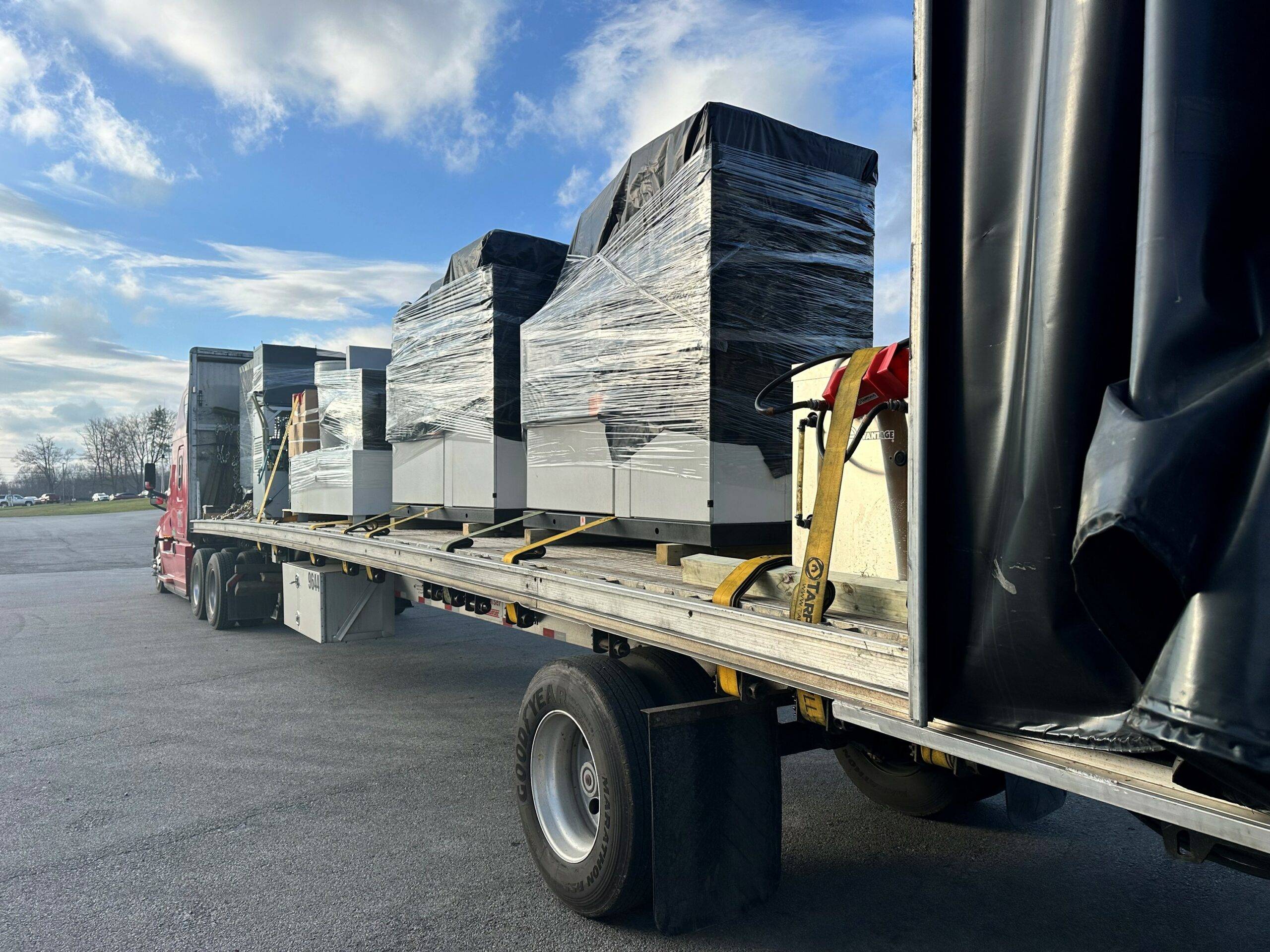
The tarp slides on a frame from one end of the trailer to the other and encloses the load. It is not a tarp draped over a machine. The frame forms a covered tunnel over the freight that keeps out weather and road debris for the whole trip.
For the right freight, a Conestoga is not a premium extra. It is the right trailer.
How does a Conestoga trailer work?
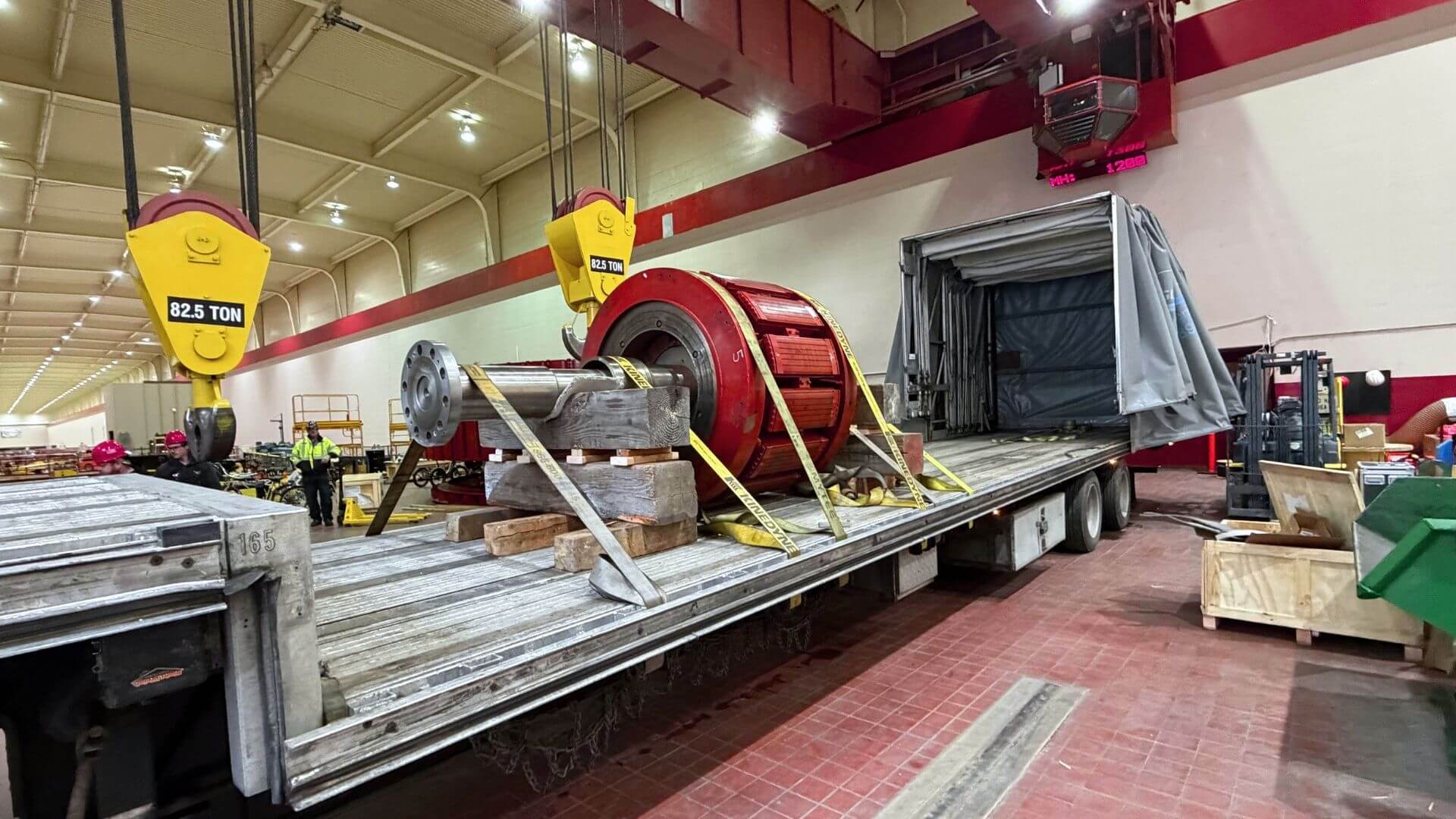
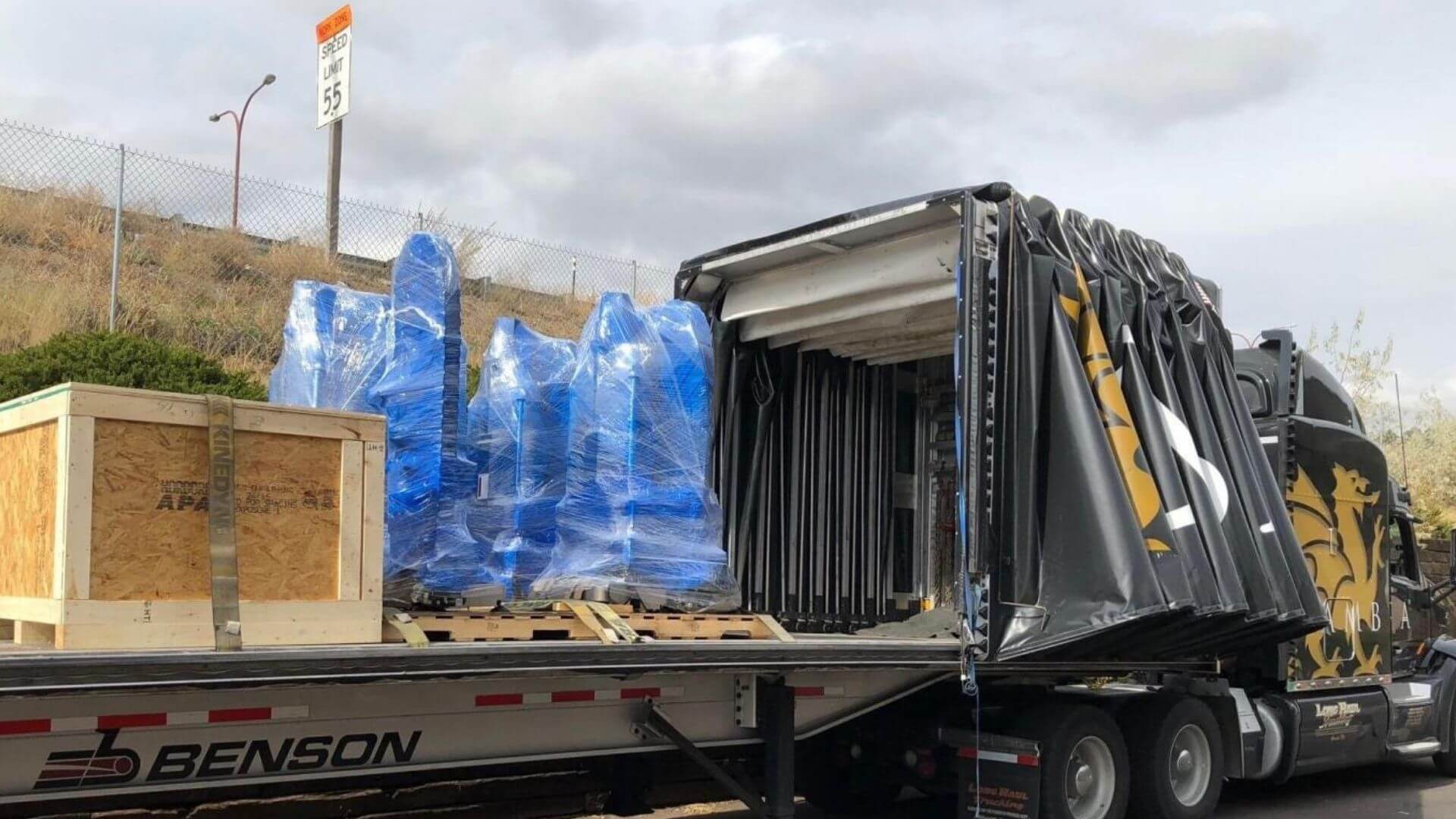
Aluminum bows ride in tracks along the deck. The tarp rolls open for loading, then rolls closed and latches, so it covers the freight without resting on it.
The rolling tarp system was introduced by Aero Industries in 1984, and Conestoga is Aero’s trademarked name for it. The bows and tarp slide along a track on each side of the deck. The system opens from either end for crane, forklift or side loading. Once the freight is loaded and secured, the tarp rolls closed and latches at both ends.
That matters because of what a draped tarp can do to machinery. A canvas tarp pulled over an enclosed machine rests on raised surfaces, panel edges and glass, and road vibration works it back and forth for hundreds of miles. The result can be scuffed paint, moisture held against electronics and pressure on parts that were not built to carry it. The damage is often subtle at delivery and shows up later as worn finish, moisture in the electrical cabinet or scratched glass.
With a Conestoga, the tarp rides on the frame instead of the machine.
What are the 3 types of Conestoga trailers?
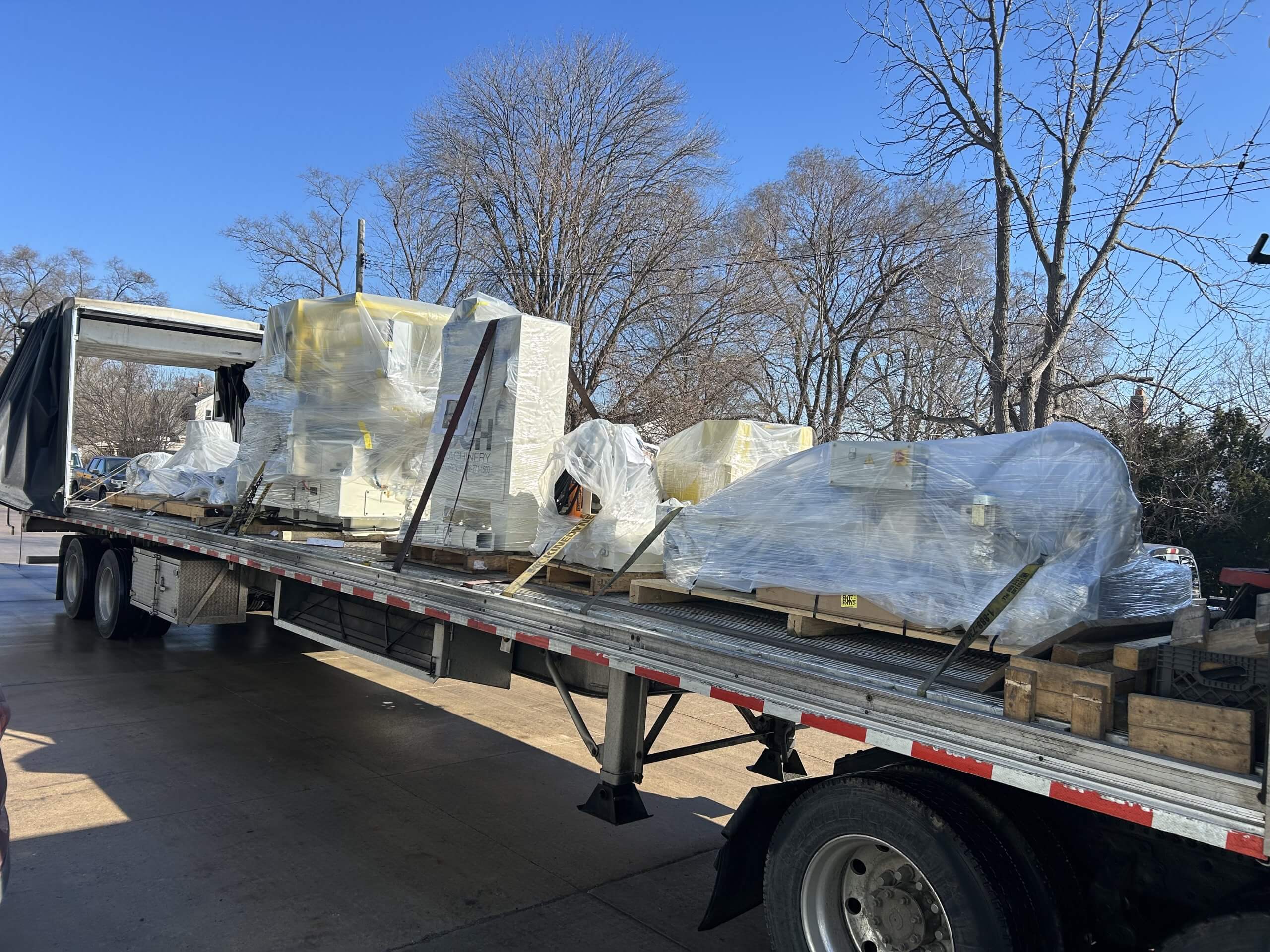
The Conestoga flatbed, the Conestoga step deck and the double drop Conestoga. The right one depends mostly on how tall the freight is.
The specs below are typical ranges. Exact deck height, inside clearance and capacity vary by trailer and carrier, so confirm them on your load before booking.
Scroll sideways to compare Conestoga and open-deck trailer diagrams.

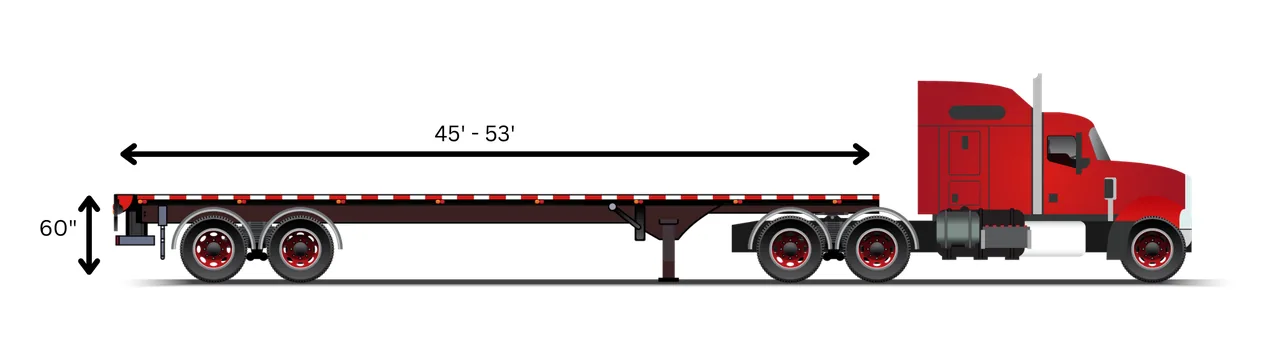

Type 1: Conestoga flatbed
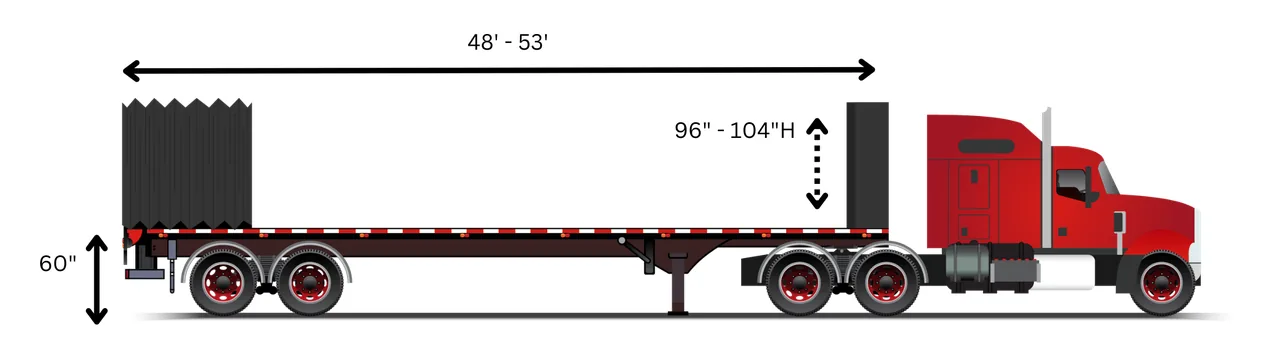
- Deck height: about 60 inches
- Inside height: about 96 to 104 inches
- Inside width: about 102 inches
- Length: 48 to 53 feet
- Typical capacity: about 45,000 to 47,000 lbs
The Conestoga flatbed is the most common version and a good starting point for machinery and industrial freight that fits within about 96 to 104 inches of height on the deck.
The deck sits at standard flatbed height, about 60 inches off the ground, so the freight’s height, including any skid or pallet, has to fit under the frame. Many compact CNC machines, injection molders, press brakes and palletized precision equipment fit here.
Good fits:
- Compact CNC machines under about 84 inches tall on the skid
- Low-profile injection molding machines
- Laser and plasma cutters with exterior control pendants
- Palletized industrial equipment with finished surfaces
- Steel fabrications or panels where surface contact matters
See Conestoga trailer specs and service.

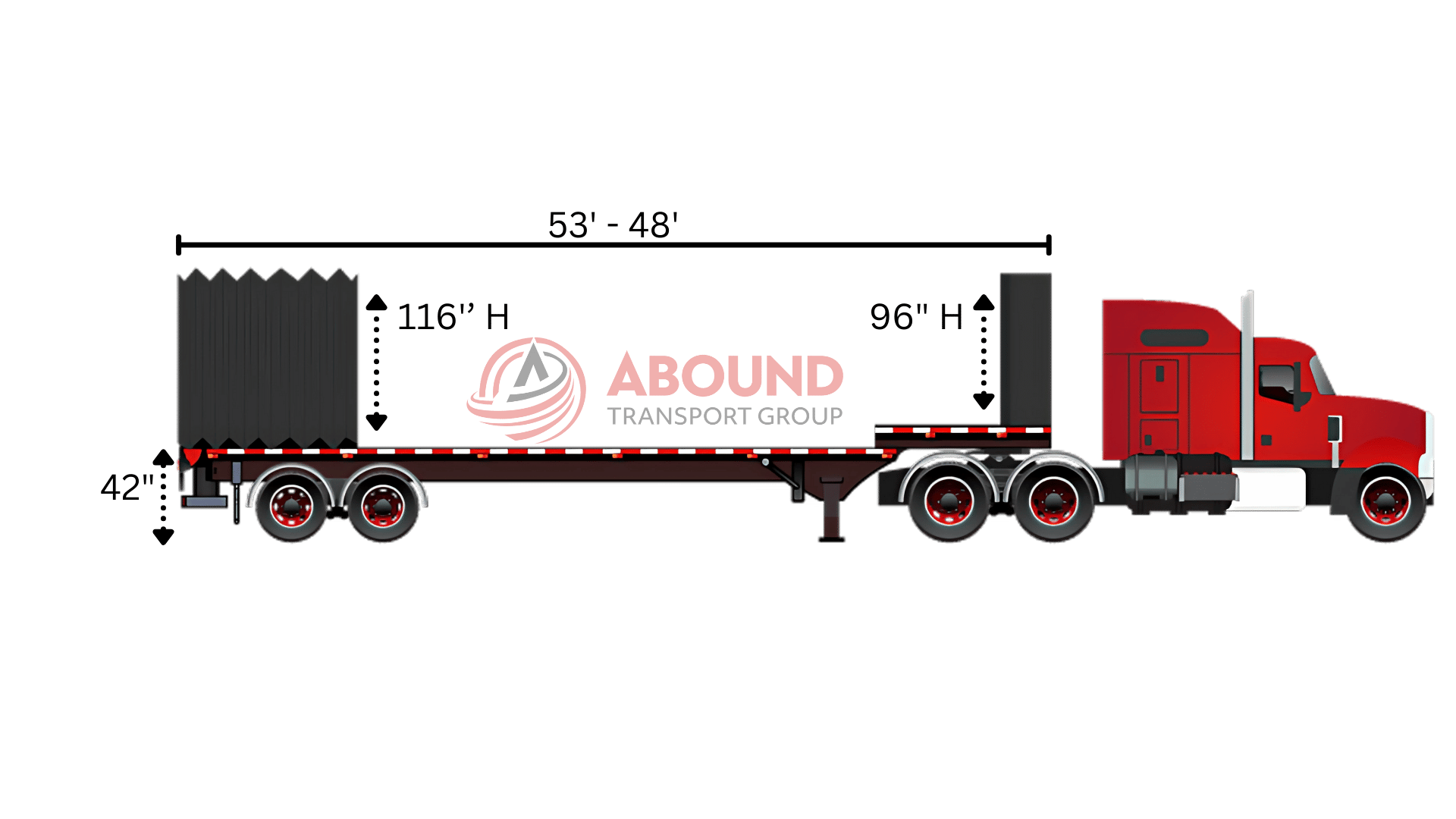
Type 2: Conestoga step deck
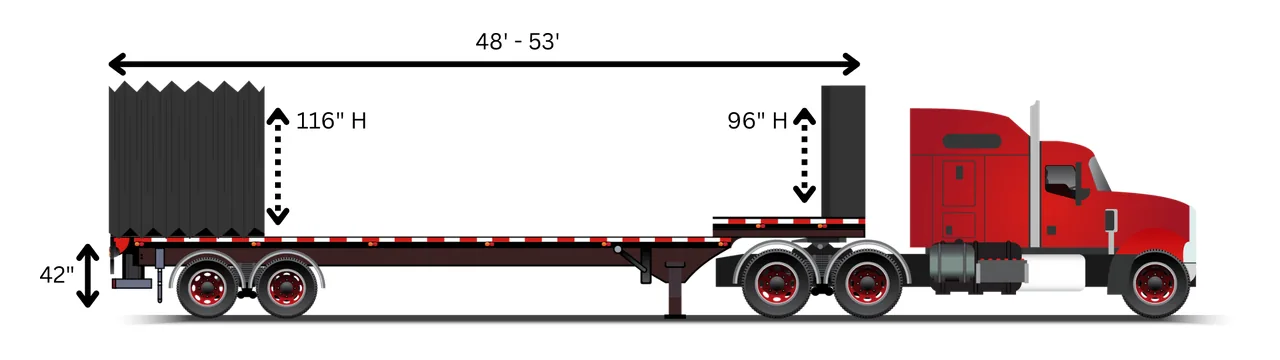
- Lower deck height: about 42 inches
- Upper deck height: about 60 inches
- Lower deck inside height: about 116 inches
- Upper deck inside height: about 96 inches
- Inside width: about 102 inches
- Length: 48 to 53 feet
- Typical capacity: about 44,000 lbs
The Conestoga step deck is a common choice for CNC machinery. The drop from a 60-inch flatbed deck to a 42-inch lower deck gives about 18 more inches of usable height under the frame. That extra room is what lets many taller machining centers, lathes and horizontal machining centers travel without an overheight permit.
The math is simple: total loaded height is deck height plus freight height. A machine about 105 inches tall on a 42-inch lower deck comes to about 147 inches, a little over 12 feet, which is under the 13′6″ limit common in many states. The same machine on a 60-inch flatbed deck reaches about 165 inches, or 13′9″, which is over that limit and would need a permit where 13′6″ applies. State limits vary, so check the Abound legal height map for your route.
Good fits:
- Vertical machining centers too tall for a Conestoga flatbed
- Turning centers and lathes
- Horizontal machining centers
- Press brakes over about 90 inches tall
- Laser systems with enclosures
- Any machine with a painted enclosure, exterior glass or a control panel that should not touch a tarp
Read the full step deck Conestoga trailer guide.
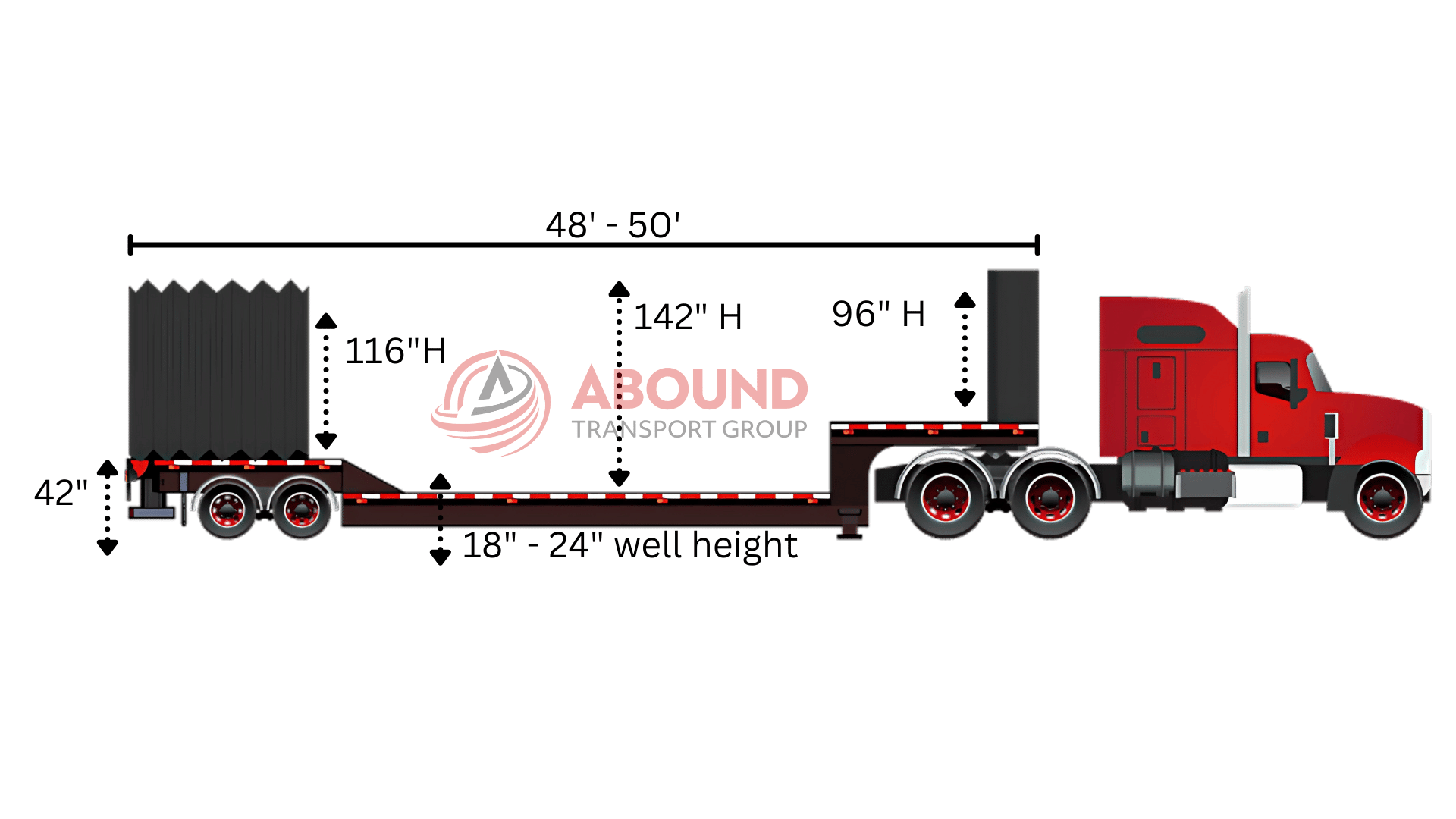
Type 3: Double drop Conestoga
- Well deck height: about 18 to 24 inches
- Well inside height: about 142 inches
- Rear deck inside height: about 116 inches
- Front deck inside height: about 96 inches
- Inside width: about 102 inches
- Length: 48 to 50 feet
- Typical capacity: about 35,000 to 40,000 lbs
The double drop Conestoga is the specialized option for freight that is too tall for a step deck but still needs tarp-free protection. The well sits about 18 to 24 inches off the ground, which leaves about 142 inches of inside height, nearly 12 feet, fully enclosed.
It is less common than the other two. Capacity is lower and availability is tighter, so plan more lead time. For equipment that is both tall and surface-sensitive, it is often the only trailer that offers both the height and the protection.
Good fits:
- Very tall vertical machining centers over about 116 inches
- Large grinding machines and boring mills
- Tall robotics and automation equipment
- Lab and imaging equipment that needs full enclosure
Conestoga vs. tarped flatbed: when does it actually matter?
It matters when the freight has surfaces a moving tarp can damage. For rugged, crated or wrapped freight, a tarped flatbed is usually fine.
A tarped flatbed is usually fine for: structural steel, lumber, palletized materials in cardboard or shrink wrap, crated equipment where the crate takes the tarp contact, and freight whose outer surface is not sensitive to abrasion, moisture or pressure.
A Conestoga is the better fit for: anything with a painted enclosure, exterior glass, control panels, exposed electronics or finished surfaces that a tarp would rub for hundreds of miles. CNC machines, laser systems, enclosed press brakes, precision grinders, robotics and automation equipment fall in this group.
A Conestoga usually costs more than a tarped flatbed, and the difference depends on the lane, the trailer type and the market that week. For high-value, surface-sensitive machinery, weigh that difference against the cost of repairing a scuffed enclosure or a wet electrical cabinet, which may not be covered on a used machine. Compare both in tarp vs. Conestoga for CNC machine transport.
| Freight type | Tarped flatbed | Conestoga |
|---|---|---|
| Steel, lumber, construction materials | Fine | Not necessary |
| Crated equipment | Fine | Not necessary |
| CNC machines with enclosures | Risk of tarp rash | Better fit |
| Machines with exterior glass | Risk of damage | Better fit |
| Precision equipment with electronics | Risk of moisture | Better fit |
| Injection molders with control panels | Risk of contact damage | Better fit |
| Palletized industrial freight | Fine | Optional upgrade |
Which Conestoga fits each machine type?
Use this as a starting point, then confirm with the measured height on the skid and the machine’s weight.
| Machine type | Typical Conestoga variant |
|---|---|
| Compact VMC or lathe under 84 inches | Conestoga flatbed |
| Haas VF-2, VF-3 | Conestoga flatbed or step deck |
| Haas VF-6, VF-6SS, large VMC | Conestoga step deck or double drop |
| Mazak QT series lathe | Conestoga step deck |
| Mazak Integrex, horizontal systems | Conestoga step deck |
| Trumpf or Bystronic laser | Conestoga flatbed or step deck |
| Press brake under 90 inches | Conestoga flatbed |
| Press brake over 90 inches | Conestoga step deck |
| Injection molder under 102 inches tall | Conestoga flatbed |
| Large injection molder over 102 inches | Conestoga step deck |
| Very tall machine over 116 inches, surface-sensitive | Double drop Conestoga |
Models and options vary. Always plan from the measured height, width and weight of the machine as it will ship, including the skid and any attached peripherals.
How is a Conestoga trailer loaded?
From the side, the top or the rear. The tarp rolls out of the way, the freight loads, and the tarp rolls back closed.
One practical advantage over a dry van is loading flexibility. A Conestoga can be loaded from:
The side, by crane or forklift. The tarp rolls to one end, the machine loads from the side, and the tarp rolls back. This is the most common method for CNC machines and industrial equipment.
The top, by overhead crane, which is common in plants with bridge cranes. The frame opens fully for top loading.
The rear, by forklift, when the machine’s footprint and weight allow it. This is less common for heavy machinery and more common for palletized and crated loads.
One width limit to note: a Conestoga’s inside width is generally about 102 inches, the same as the federal standard width of 8.5 feet on the National Network. Freight wider than that needs an open flatbed or step deck with conventional tarps, and possibly a wide-load permit.
Rigging is a separate service from the truck. We can coordinate loading timing with your rigger. See industrial rigging and transport.

Pro tips from the logistics desk
- Measure height on the skid, not from a brochure, before choosing a Conestoga type.
- Double drop Conestogas are less common, so book them with more lead time.
- Ask for photos with the tarp closed and latched before the truck leaves.
Common mistakes to avoid
- Booking a Conestoga flatbed for a machine that only fits on a step deck.
- Forgetting that the inside width is about 102 inches.
- Draping a tarp over a painted enclosure to save on the trailer rate.

Conestoga trailer FAQ
Quick answers to the questions shippers ask most about Conestoga trailers.
What is a Conestoga trailer?
A Conestoga trailer is an open-deck flatbed, step deck or double drop trailer fitted with a rolling tarp on an aluminum frame. The tarp slides along a track from one end of the trailer to the other and encloses the load without resting on it. It combines flatbed loading with the weather protection of a covered trailer.
What is the difference between a Conestoga and a tarped flatbed?
On a tarped flatbed, a tarp is draped over the cargo and strapped down, so it touches every surface it covers. On a Conestoga, a frame arches over the load and the tarp rolls over that frame instead of the freight. For machinery with painted enclosures, glass or electronics, that helps prevent tarp rash and moisture contact on long hauls.
What types of Conestoga trailers are there?
There are three main types: the Conestoga flatbed, with about 96 to 104 inches of inside height; the Conestoga step deck, with about 116 inches on the lower deck; and the double drop Conestoga, with about 142 inches in the well. The right type depends on the freight’s height, weight and surface sensitivity.
What is the maximum height for a Conestoga trailer?
Typical inside heights are about 96 to 104 inches on a Conestoga flatbed, about 116 inches on a step deck’s lower deck, and about 142 inches in a double drop well, measured from the deck to the inside of the frame. Exact clearance varies by trailer, so confirm it on your load.
Can a Conestoga trailer handle oversize freight?
Inside width is generally about 102 inches, so freight wider than that needs a standard open-deck trailer with conventional tarps and may need a wide-load permit. Height is limited by the frame’s inside clearance, and weight follows normal legal limits unless the load is permitted.
How much more does a Conestoga cost compared to a flatbed?
A Conestoga usually costs more than a tarped flatbed. The difference depends on the lane, the trailer type and current market conditions, so the best way to compare is to quote both for your shipment. For surface-sensitive or high-value machinery, the added protection is often worth it.
Do Conestoga trailers work for cross-border shipping?
Yes. Abound Transport coordinates Conestoga moves across the U.S., Canada and Mexico with independent carriers. Cross-border moves need proper customs paperwork from a licensed customs broker, and Mexico shipments may involve a transfer between carriers at the border.
Shipping across a border? See cross-border shipping.
Get the right Conestoga for your freight
Abound Transport matches the Conestoga type to your freight’s height, width and weight, sources a qualified independent carrier through Armstrong’s carrier network, coordinates loading with your rigger and asks for securement photos before the truck leaves. Additional all-risk cargo coverage may be available for qualifying shipments after written confirmation; see cargo insurance.
Request a Freight QuoteTalk with an agent at (800) 957-2558, Mon to Fri, 5:30 AM to 5:00 PM PT.
Sources
Official references and company pages cited in this guide.
Abound Transport Experts
The Abound Transport team is a family-operated logistics agency based in Southern Oregon. As an authorized agency of Armstrong Transport Group, LLC, we give every shipper one-to-one service from the first quote to delivery.
Never Miss an Update
Add aboundtransportgroup.com as a Preferred Source on Google.
★ Add to Preferred Sources