

For CNC machine transport, tarp vs. Conestoga is the second big decision after the trailer itself, and it often matters more for the machine’s condition on arrival. This guide explains what tarping involves, where it falls short on precision equipment, what a Conestoga does differently and how to choose for your machine.
Why does the cover choice matter for CNC machines?
Because CNC machines are precision equipment, and the wrong cover can damage surfaces, electronics and schedules.
Most shipping conversations focus on the trailer: flatbed, step deck or double drop. The second decision, how will the machine be covered?, gets less attention but causes a lot of transit damage.
CNC machines have machined surfaces, control cabinets, spindles, coolant systems and tight tolerances. The wrong cover choice can do more than scratch a panel: it can trigger a dispute with a buyer or delay a production startup.
What does tarping a CNC machine actually look like?
A driver hand-applies heavy tarps over the machine and ties them down at many points.
On a flatbed or step deck, the driver drapes canvas or vinyl tarps, often 4, 6, 8 or 10 feet tall, over the load and secures them with straps, hooks and bungees. Tall machines usually need a full 10-foot tarp over the whole profile.
There is no universal standard for how a load is tarped. Some drivers are meticulous and experienced with machinery; others are not. On long hauls, a driver may stop to re-tarp if something shifts, or may not notice until delivery.
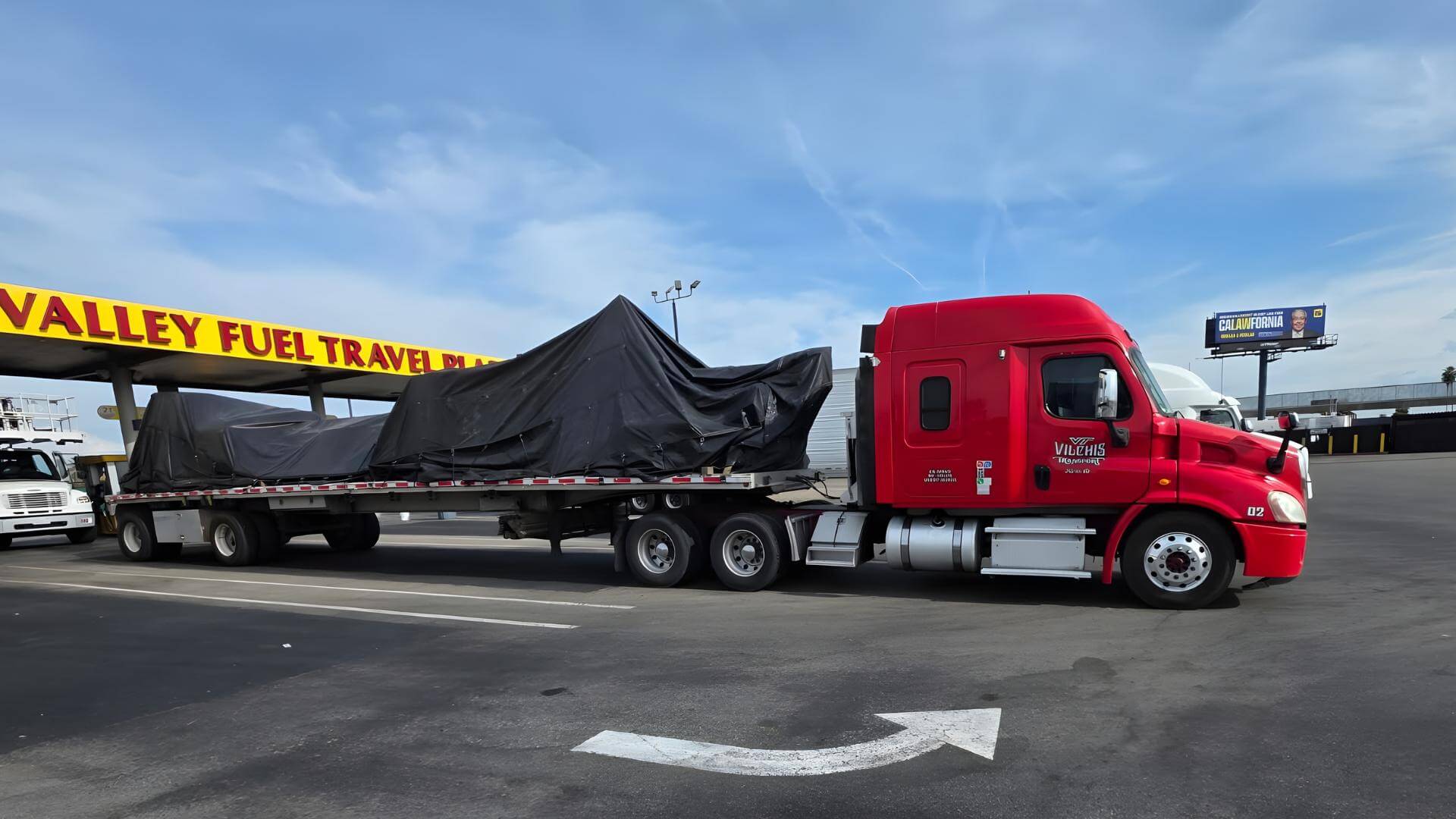
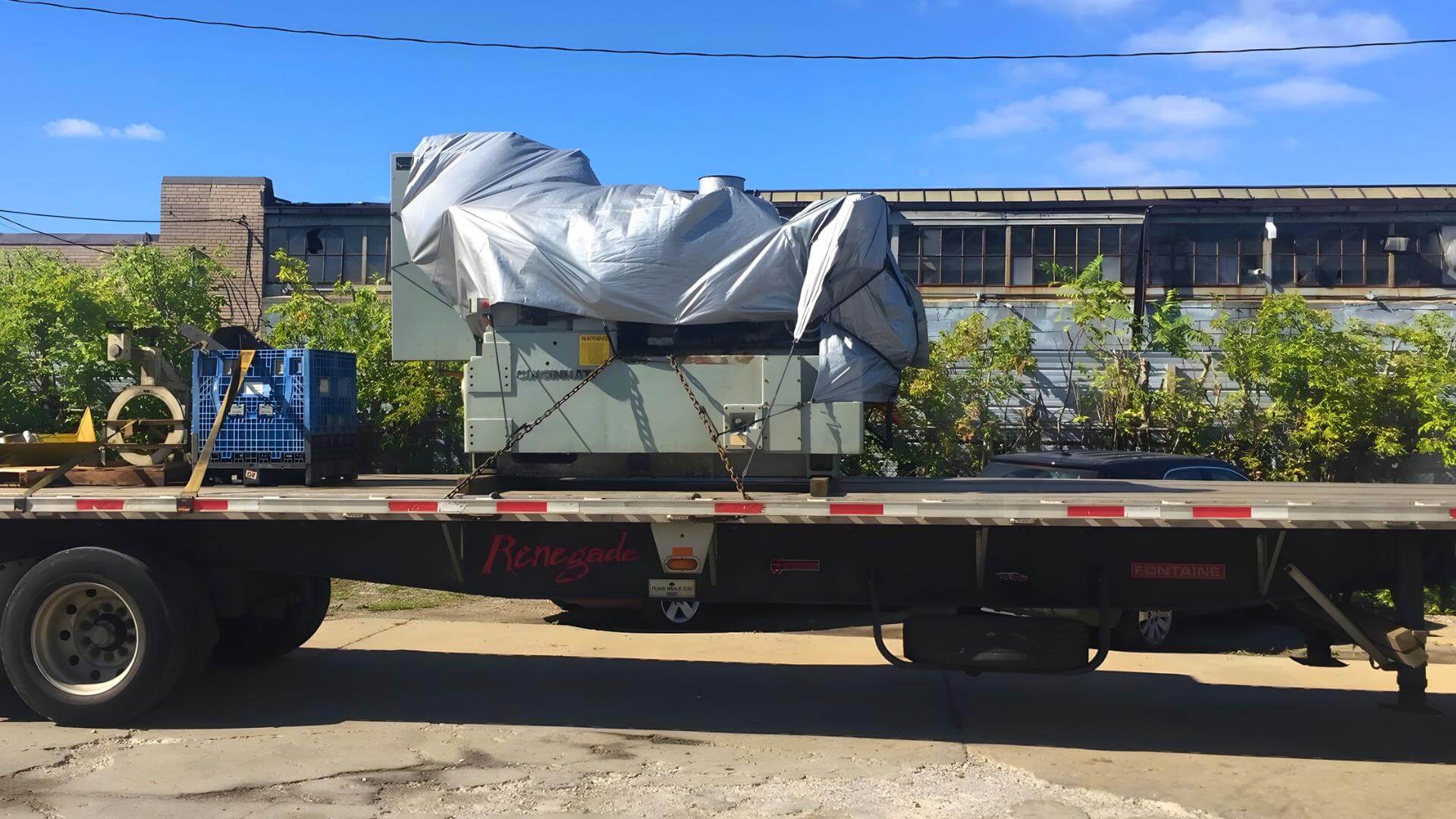
What are the real risks of tarping CNC machinery?
Tarp rash, poor coverage on complex shapes, tears and wind flutter, all depending on the driver’s skill.
Tarp rash. When a tarp shifts or flexes in the wind, its abrasive surface drags across the machine. On a painted cabinet that is cosmetic; on a machined casting, ground surface or spindle housing, it can be functional damage.
Complex profiles. Spindle heads, tool changers, chip augers, platens and tie bars stick out at odd angles. Getting a flat tarp to conform and stay put for a long haul is hard, and gaps let in water and road grit.
Tears and exposure. UV, cold and constant flexing can crack or split a tarp in transit. If it is not caught at a stop, the machine rides exposed for hours.
Wind lift and flutter. Even a well-secured tarp lifts and slaps at the edges at highway speed. Over a long haul, that repeated contact adds up on painted panels, glass and sensors.
Driver experience. Tarping a complex industrial machine is a skill, and experience varies widely from driver to driver.
When is a tarp fine for a CNC machine?
When the machine is low-value, simple in shape, already wrapped or on a short haul.
- Low-value surplus equipment headed to scrap or resale where cosmetics do not matter.
- Simple, boxy profiles with no protruding components.
- Short hauls with low weather risk and a machinery-experienced driver.
- Machines already wrapped in film or foam, with the tarp as an outer weather layer.
The key phrase is properly applied by an experienced driver. That is the variable you cannot always control.
What does a Conestoga actually do differently?
Its tarp rolls on rigid bows above the load, so the cover rides on the frame instead of the machine.
A Conestoga is a flatbed, step deck or double drop fitted with a rolling bow-and-tarp system. For a CNC machine, that means:
- The tarp rides on the frame, not on the machine, which avoids tarp rash and flutter against surfaces.
- Consistent coverage from pickup to delivery, without gaps from a hand-tied tarp.
- Less dependence on tarping skill, because the cover closes mechanically.
- Side and top loading stay available by forklift or crane before the system is rolled closed.
- Enclosed on all sides for the full haul.
The machine still has to be secured to federal standards under the cover (49 CFR 393 Subpart I).
Which Conestoga fits your machine?
Match the Conestoga type to the machine’s height and weight.
| Machine type | Recommended Conestoga |
|---|---|
| Smaller VMCs, lathes and laser cutters under about 8 feet tall | Conestoga flatbed: deck about 60 in, typical capacity about 45,000 to 47,000 lbs |
| Mid-size machining centers and grinders | Conestoga step deck: lower deck about 42 in, loads up to about 116 in tall, about 44,000 lbs |
| Tall machining centers, large injection molders and boring mills | Conestoga double drop: well about 18 to 24 in, about 142 in inside height, about 35,000 to 40,000 lbs |
Swipe to compare covered and tarped trailers →
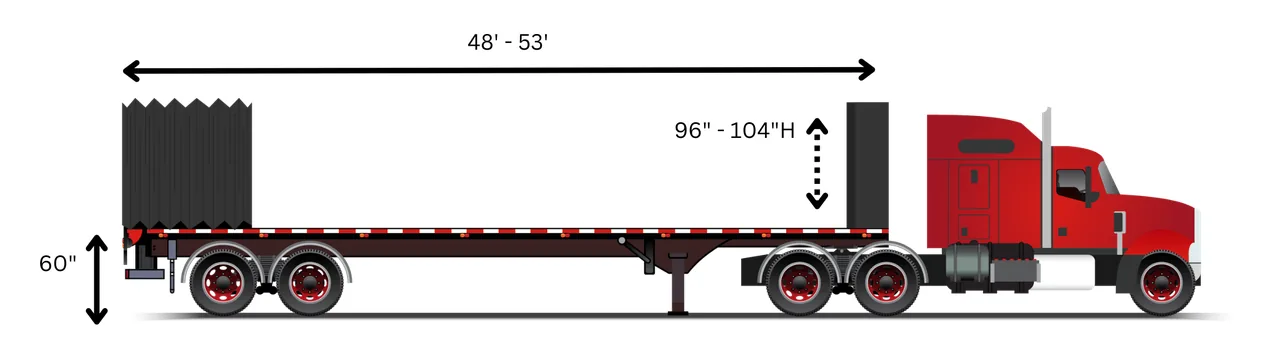
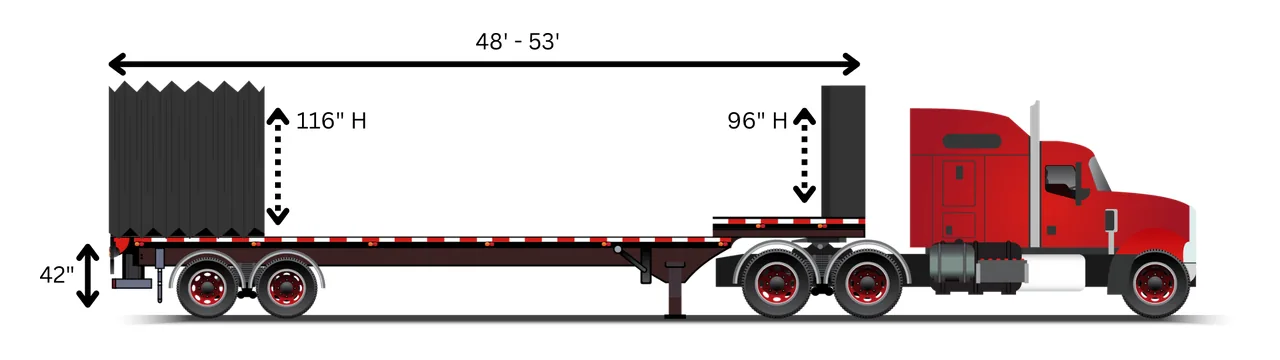

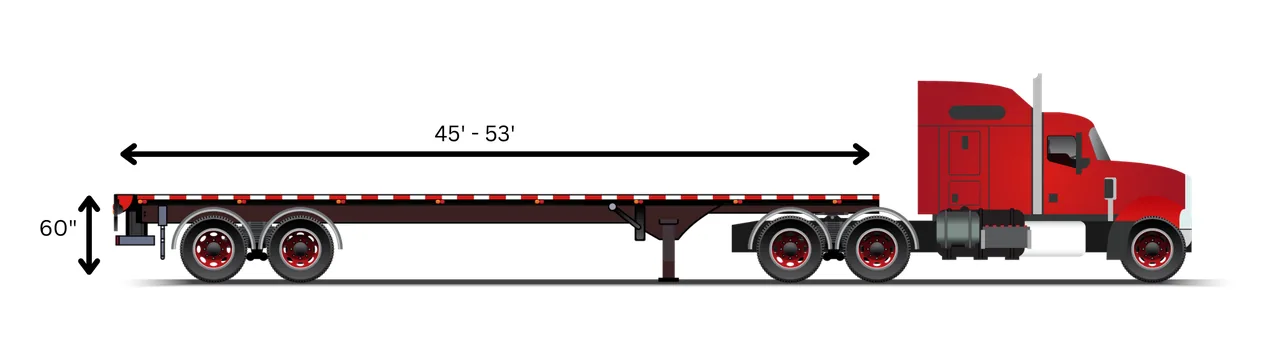

For full dimensions, see our Conestoga trailer types guide and the state height map.
Does a Conestoga cost more than a tarped trailer?
Yes, Conestogas usually carry a rate premium, so compare it with the value at risk.
Conestoga capacity is more specialized, so expect a higher rate than a standard tarped flatbed or step deck. Ask for both options on your quote.
Then compare the difference with what is at stake: CNC machines often carry five- or six-figure values, and a damaged control cabinet or machined surface can mean a repair bill, a dispute or a delayed startup. For auction purchases, dealer transfers and machines going straight into service, the premium is often worth it. Pair the cover choice with the right coverage; see cargo insurance.
How do you decide between a tarp and a Conestoga?
Use the machine’s sensitivity, value, distance and destination as your guide.
Choose a Conestoga if:
- The machine has exposed machined surfaces, ground ways or polished castings.
- The control cabinet, glass panels or HMI screen are exposed.
- It is a long haul across several climate zones.
- The machine goes straight into production at delivery.
- It is a high-value asset where any damage claim would hurt.
- You are shipping for a customer and your reputation is on the line.
A tarped trailer may work if:
- The machine is low-value surplus.
- It is a short haul with a machinery-experienced driver.
- It will be cleaned or rebuilt at the destination anyway.
- The profile is simple with nothing protruding.
What is the bottom line on tarps vs. Conestogas?
The trailer decides what fits; the cover decides how well it is protected.
Tarps are not bad, but for high-value, precision machinery going straight into service, a Conestoga removes the biggest risks: tarp contact, inconsistent tarping, mid-transit exposure and weather. Abound Transport helps you get both decisions right. Learn more about our CNC machine transport and how to ship a CNC machine.
Tarp vs. Conestoga FAQ
Quick answers for shippers choosing a cover for CNC machines.
Is a Conestoga better than a tarp for CNC machines?
For high-value or precision CNC machines, usually yes. A Conestoga tarp rides on a frame above the machine and encloses it for the whole trip, while a hand-applied tarp rests on the machine and can rub or flutter.
What is tarp rash?
Tarp rash is abrasion caused when a tarp shifts or flutters against freight during transit. On machined or painted surfaces it can cause cosmetic or functional damage.
When is tarping a CNC machine acceptable?
Tarping can be acceptable for low-value or surplus machines, simple boxy profiles, machines already wrapped in film or foam, and short hauls with an experienced driver.
Which Conestoga trailer do I need for a CNC machine?
It depends on height and weight. Smaller machines often fit a Conestoga flatbed, mid-size machines a Conestoga step deck, and the tallest machines a Conestoga double drop.
Does a Conestoga cost more?
Usually. Conestoga capacity is more specialized, so rates are typically higher than a tarped flatbed or step deck. Ask for both options and compare against the machine’s value.
Does the machine still need to be chained down inside a Conestoga?
Yes. Cargo under a Conestoga must still be secured to federal cargo securement standards in 49 CFR 393 Subpart I.
Get the right trailer and cover for your machine
Abound Transport matches the trailer and cover to your CNC machine, sources a qualified independent carrier through Armstrong’s carrier network, coordinates with your rigger and asks for securement photos before the truck leaves.
Request a Freight QuoteTalk with an agent at (800) 957-2558, Mon to Fri, 5:30 AM to 5:00 PM PT.
Sources
Official references and company pages cited in this guide.
Abound Transport Experts
The Abound Transport team is a family-operated logistics agency based in Southern Oregon. As an authorized agency of Armstrong Transport Group, LLC, we give every shipper one-to-one service from the first quote to delivery.
Never Miss an Update
Add aboundtransportgroup.com as a Preferred Source on Google.
★ Add to Preferred Sources