

Wondering how to ship an injection molding machine cross border? This featured shipment shows how Abound Transport Group coordinated a Cincinnati Milacron MTS-225 from Portland, Oregon to Santiago de Querétaro, Mexico, as a legal size load on an air ride flatbed, with Mexico customs clearance and a no transload trailer handoff at Laredo.
What was shipped, and where did it go?
A Cincinnati Milacron MTS-225 injection molding machine, from Portland, Oregon to Santiago de Querétaro, Mexico.
- Machine: Cincinnati Milacron MTS-225 injection molding machine
- Origin: Portland, Oregon
- Destination: Santiago de Querétaro, Mexico
- Load size: Legal size flatbed load
- Trailer: Air ride aluminum flatbed
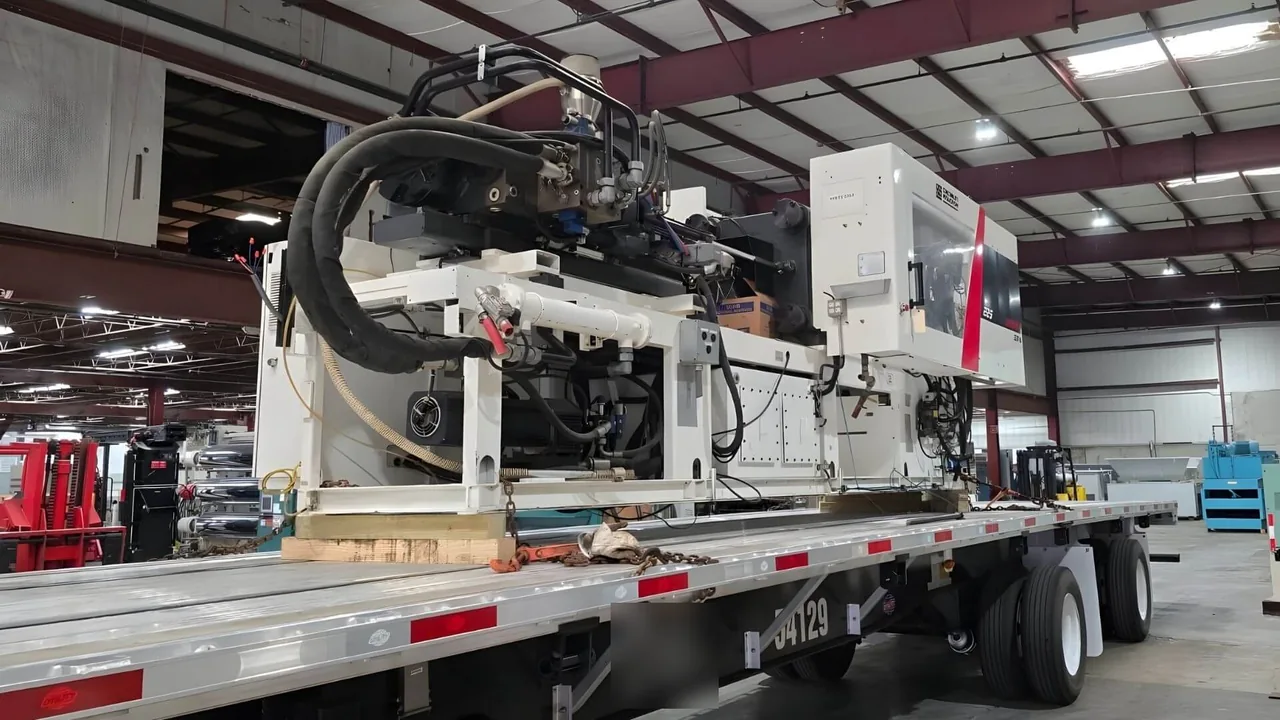
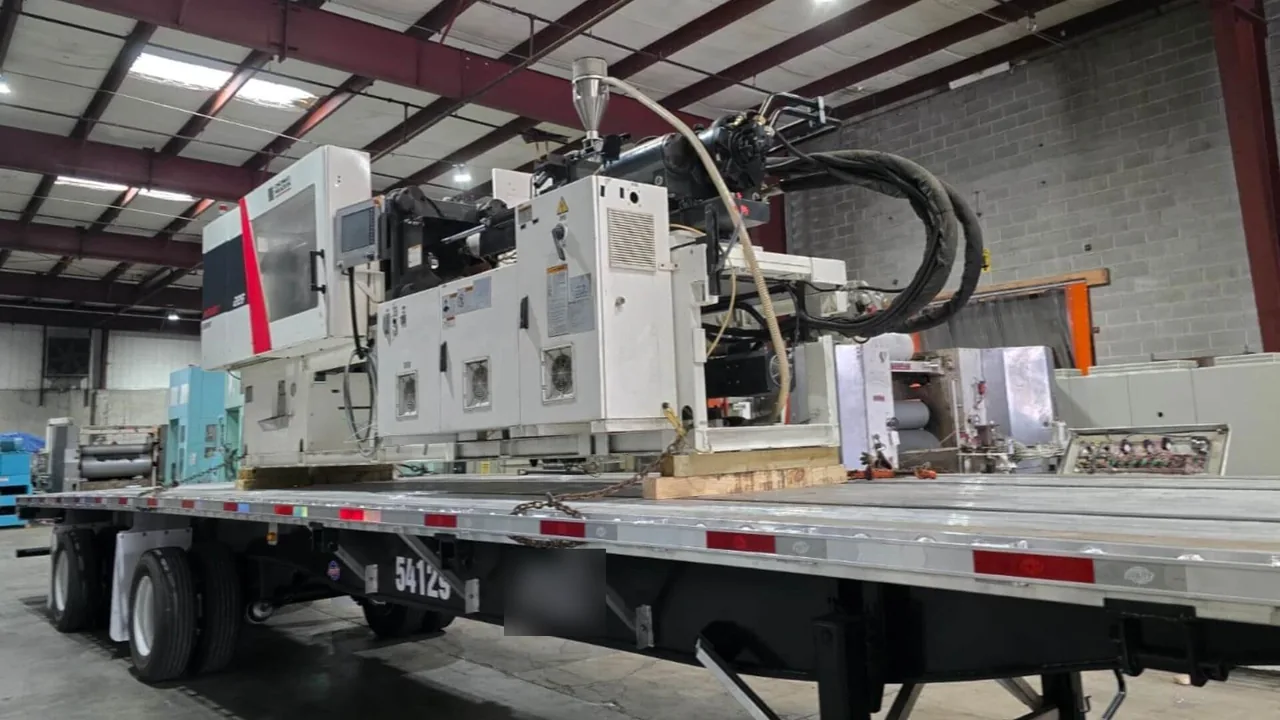
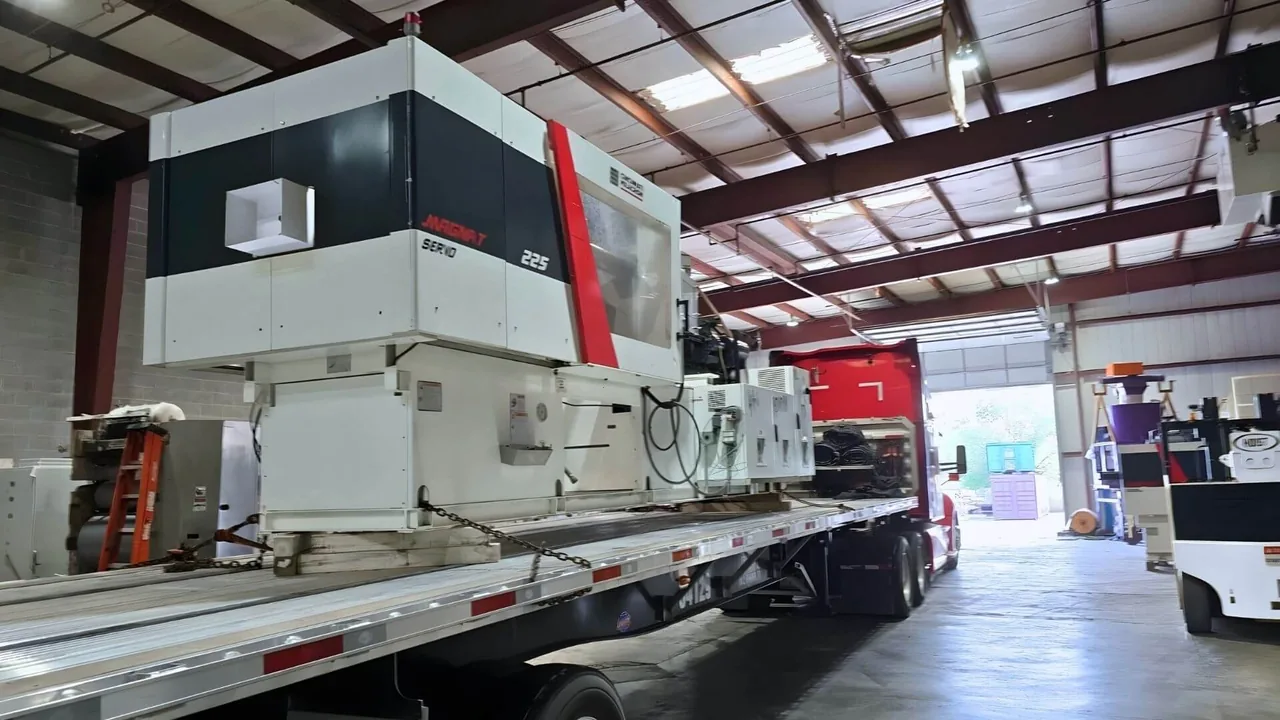
- Loading: On wood skids, chained to the deck
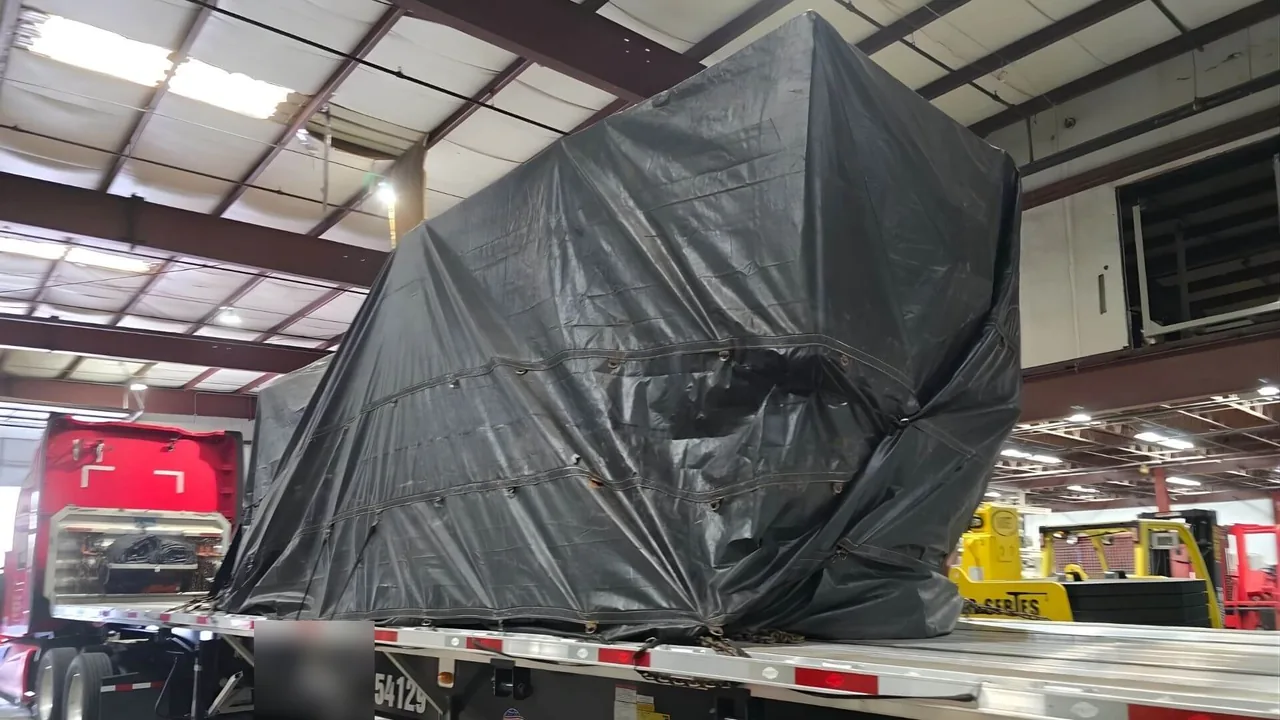
- Protection: Tarped in the U.S., retarped by the Mexican carrier
- Border: Laredo, Texas, through trailer handoff with no transload
- Abound role: Coordinated the carriers, the border handoff and the paperwork flow
Every cross border move is quoted on its own lane, equipment and timing, so send your details for a quote on your route.
How did Abound coordinate this cross border move?
A U.S. flatbed carrier ran Portland to Laredo, then a Mexican carrier took the same loaded trailer to Querétaro.
The Abound team booked a U.S. flatbed carrier with an air ride trailer to pick up the machine in Portland and run it to Laredo, Texas. At Laredo, the U.S. driver removed the tarps and handed the loaded trailer to the Mexico side. The machine never came off the trailer.
The Mexican carrier tarped the load again with its own tarps, hauled it to Santiago de Querétaro, delivered it, then returned the empty trailer to the border. Abound coordinated each handoff, worked with a Mexico team of experts on customs, and kept the customer updated from pickup to final delivery.
Why ship an injection molding machine on an air ride trailer?
Air ride suspension cushions road shock that can loosen fittings and jar electronics and hydraulics.
An injection molder is heavy steel wrapped around sensitive parts: the control cabinet and screen, servo drives, sensors, hydraulic pumps, valves and the lines that connect them. Hard bumps and long hours of vibration can loosen fittings, crack brackets and knock controls out of adjustment.
An air ride trailer uses air bags in place of steel leaf springs, so the deck rides softer over rough pavement and expansion joints. On a run of more than two thousand miles from Oregon to central Mexico, that softer ride is cheap insurance for the parts that are expensive to repair. Ask for air ride when you book any machine with electronics on board.
How do you prepare an injection molding machine for transport?
Follow the manufacturer’s shipping steps: lock the moving parts, drain or seal fluids, and remove and crate loose parts.
The shipper’s maintenance team or rigger usually handles prep. Common steps include:
- Close and lock the clamp and secure the injection unit per the OEM or rigger’s procedure.
- Drain or cap hydraulic and cooling lines so nothing leaks onto the deck or the road.
- Remove the hopper, robots, conveyors and other loose parts, then crate and label them.
- Photograph the machine and record serial and model numbers for the customs paperwork.
- Confirm the shipping weight and the height on skids, which drive the trailer choice.
How is an injection molding machine secured on a flatbed?
On skids, with rated chains and binders at solid points, plus edge protection where chains touch the machine.
On this move the machine rode on wood skids. Skids lift the base off the deck, spread the weight and give chains clean anchor points away from panels and guards. Loading is normally done by a rigging crew with a forklift rated for the machine, or a crane.
Federal cargo securement rules require tiedowns to hold against 0.8 g of braking force forward and 0.5 g rearward and sideways. For a molder, that means chains and binders sized for the weight, blocking so the base cannot slide, and edge protectors anywhere a chain crosses a corner or painted surface. If you do not have a rigger, Abound can help coordinate one through industrial rigging partners.
Why tarp an injection molding machine?
A tarp keeps rain, road spray and grime off the controls, the hopper throat and the hydraulic unit.
Road grime is fine grit mixed with water and oil. Driven into a control cabinet, a hopper or open hydraulic ports, it causes problems long after delivery. A full tarp, snug and secured so it cannot flap, keeps the machine clean on the open road.
On a through trailer move the tarps usually belong to each carrier, so plan for two tarping jobs: the U.S. driver tarps at pickup and untarps at the border, and the Mexican carrier tarps again with its own tarps. If a machine must stay fully enclosed, compare a Conestoga instead of a hand tarp.
Which trailer works best: flatbed, step deck or Conestoga?
It depends on the machine’s height on skids, its weight and how it loads. Most molders ride on open deck trailers.
- Flatbed: Side and top loading; suits freight up to about 8 ft 6 in tall
- Step deck: Lower main deck for taller machines, up to about 10 ft
- Conestoga: Rolling tarp system for machines that must stay covered
- Air ride: Ask for it on any of these when the machine has electronics
This MTS-225 fit on an air ride flatbed within legal width and height for the route. Compare the options in flatbed vs step deck vs RGN, or see step deck and Conestoga trailers. Heights are typical ranges; the assigned carrier confirms the actual deck.
What is a through trailer, or no transload, border handoff?
The same loaded trailer goes from the U.S. carrier to a Mexican carrier at the border, and the freight never leaves the deck.
In cross border trucking this is called through trailer service, or caja directa in Mexico. The carriers sign a trailer interchange agreement that spells out who is responsible for the trailer on each leg and how it comes back. A transfer carrier may move the trailer across the bridge between the U.S. and Mexican carriers.
The other option is a transload, where the freight is lifted off one trailer and onto another near the border. For a heavy machine, every extra lift is another chance for damage and another day of handling, so Abound coordinates non transload, through trailer moves whenever the lane allows. See how these moves work on the cross border shipping and Mexico freight pages.
Do you need a customs broker to ship machinery to Mexico?
Yes. A licensed Mexican customs broker, called an agente aduanal, clears the import, and a U.S. broker or forwarder handles the export side.
Mexico requires a customs declaration called a pedimento for commercial imports. In plain words, it is the official form that tells Mexican customs what the machine is, what it is worth, how it is classified and what duties and taxes apply. A licensed Mexican customs broker files it for the importer of record, who must be registered in the Padrón de Importadores.
The broker builds the pedimento from a commercial invoice in Spanish, the bill of lading and the machine details you collected during prep. The Mexican carrier also needs the Carta Porte complement for the move inside Mexico. On the U.S. side, a customs broker or freight forwarder at the border handles the export paperwork, including Electronic Export Information filed in AES when the shipment requires it.
Laredo and Nuevo Laredo have many established brokerage firms. A few well known examples with offices on both sides of the border:
- O. Enrique Hinojosa Peña, Agente Aduanal: a family customs brokerage with offices in Nuevo Laredo and Laredo, Texas.
- Feroly Agencia Aduanal: a Mexican customs agency in Nuevo Laredo that partners with U.S. brokerage in Laredo.
- Livingston International: U.S. and Mexican customs brokerage, with a Laredo office.
- Sunset Transportation: a logistics provider with U.S. and Mexico customs services out of Laredo.
These are examples to start your research, not endorsements. Shippers in freight and logistics forums often say the best broker is the one who answers fast and knows your product, so ask for references and confirm their patent and port coverage.
Abound is not a customs broker. We coordinate with your brokers so the paperwork is ready before the truck reaches Laredo. Confirm duties and requirements for your machine with your broker; this guide is not legal or tariff advice.
Is a machine covered by the Mexican carrier’s insurance?
Usually not for full value. Mexican law limits carrier liability unless value is declared, so shippers add cargo coverage for the Mexico leg.
Under Mexico’s federal road transport law, a cargo carrier’s liability for loss or damage is capped by weight unless the shipper declares the value and pays for the added coverage. That cap is far below what most U.S. shippers expect, and much lower than typical U.S. truckload coverage. The insurance a Mexican carrier must carry is mainly for damage to third parties, not the freight.
That is why Abound offers third party cargo insurance for Mexico cross border shipments. It covers the declared value of the machine for the move, including the Mexico leg, so a high value molder is not left relying on a capped carrier liability.
What did this shipment look like?
Real photos from the move: skids, chains and the full tarp.
Swipe through photos from this move →
Ready to ship machinery from Oregon to Mexico?
Send the machine details and both addresses, and the Abound team will plan it end to end.
Abound is based in Southern Oregon and coordinates machinery transport from Oregon to all 50 states, Canada and Mexico. Read how to ship a CNC machine for more prep tips, or see a Haas VF-2 case study from another lane.
Cross border injection molding machine FAQ
Quick answers for shippers moving molders into Mexico.
What is through trailer service to Mexico?
Through trailer service, also called caja directa or non transload service, keeps the freight on the same trailer from origin to destination. The U.S. carrier hands the loaded trailer to a Mexican carrier at the border under a trailer interchange agreement, and the trailer returns to the border empty after delivery.
Do I need a Mexican customs broker?
Yes. Mexican imports are cleared by a licensed Mexican customs broker, called an agente aduanal, who files the pedimento for the importer of record. Most shippers also use a U.S. customs broker or forwarder at the border for the export side.
What is a pedimento?
The pedimento is Mexico’s customs declaration for imports. It tells Mexican customs what the goods are, their value, their classification and the duties and taxes due. It is supported by a commercial invoice in Spanish and a bill of lading.
Does the Mexican carrier’s insurance cover my machine?
Usually not for full value. Mexican law limits carrier liability for cargo unless the shipper declares the value and pays for added coverage. Abound offers third party cargo insurance for Mexico cross border shipments to cover the declared value.
Why use an air ride trailer for an injection molding machine?
Air ride suspension softens road shock and vibration, which helps protect the control cabinet, sensors, servo drives and hydraulic fittings on a long haul.
Can Abound ship machinery from Oregon to Mexico?
Yes. Abound coordinates machinery moves from Oregon to Mexico through independent, authorized carriers in the Armstrong Transport Group network, with a Mexico team on the customs side.
Ship your machine across the border the same way
Abound Transport matches the trailer to your machine, coordinates the border handoff and cargo insurance, and keeps you updated from pickup to final delivery.
Talk with an agent at (800) 957-2558, Mon to Fri, 5:30 AM to 5:00 PM PST.
Sources
Official references and company pages cited in this guide.
- U.S. International Trade Administration: Mexico import requirements and documentation
- U.S. Census Bureau: Export filing in AES
- FMCSA: Cargo securement rules
- Schneider: Cross border freight, transload and through trailer service
- FleetOwner: How U.S. cross border trucking operations work
- Cámara de Diputados: Ley de Caminos, Puentes y Autotransporte Federal, articles 66 to 68
- Benesch Law: Mexico transportation and logistics, carrier liability
- Abound Transport: Cargo insurance
- Abound Transport: Mexico freight
Abound Transport Experts
The Abound Transport team is a family-operated logistics agency based in Southern Oregon. As an authorized agency of Armstrong Transport Group, LLC, we give every shipper one-to-one service from the first quote to delivery.
Never Miss an Update
Add aboundtransportgroup.com as a Preferred Source on Google.